
Ken Ganley Ford Parma • Commercial Vans
2026 Ford Transit Trim Comparison
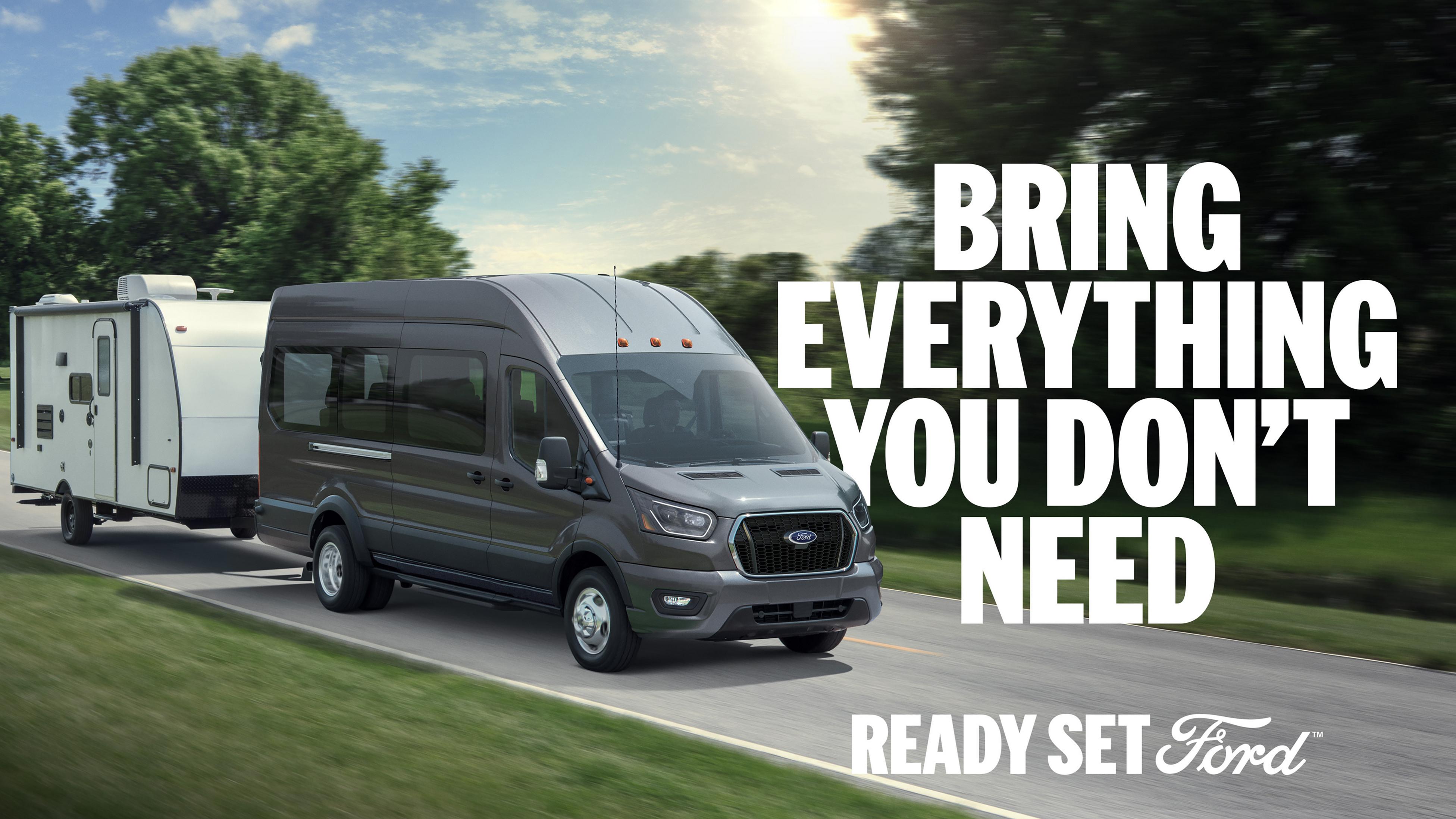
The Ford Transit is one of those vehicles where the badge on the back only tells part of the story.
A customer may come in asking for a Transit 250, but what they really need is a high-roof cargo van with enough payload left after shelving goes in. Someone else may ask about a Transit 350, when a lower-roof 150 would do the job just fine and be easier to live with around Cleveland. That is why we like to slow this conversation down a little.
At Ken Ganley Ford Parma, we help business owners, contractors, delivery drivers, shuttle operators, and fleet managers compare Transit models based on the work they actually do. The 2026 Ford Transit lineup gives you a lot to choose from: cargo vans, passenger vans, cutaway models, chassis cabs, multiple roof heights, different wheelbases, gas and electric options, and available all-wheel drive on many builds.
So yes, this is a trim comparison. But with Transit, it is really a “what are you carrying, where are you driving, and how will the van be built?” comparison.
You can start with our Transit Van page or browse our new Ford inventory if you want to see what is available now.
Transit 150
The Transit 150 is the place many lighter-duty buyers should begin.
Not because it is basic. Because it may be enough.
If your van is going to handle local deliveries, parts runs, light service work, smaller tools, cleaning supplies, floral delivery, catering, or everyday business errands, the Transit 150 can make a lot of sense. It gives you the usefulness of a full-size Ford van without moving into more capacity than you need.
That matters when the van is driven every day. Parking lots, side streets, customer driveways, low-clearance areas, and tight job sites are all part of real van ownership. Bigger is not always better if the extra capability sits unused.
The Transit 150 is worth looking at if your loads are steady but not extreme. If the van will be upfitted heavily, though, we would want to look closer before recommending it. Shelving, partitions, ladder racks, flooring, and tools can add weight quickly.
Transit 250
The Transit 250 is probably where a lot of Cleveland-area businesses will spend the most time comparing.
It gives you more working capacity than the 150 without jumping straight to the heaviest Transit builds. For electricians, plumbers, HVAC companies, mobile repair businesses, maintenance crews, and delivery operations, that middle ground is useful.
This is the van we would talk about when someone says, “We carry quite a bit, but we are not building a box truck.” It has room for a serious upfit, more daily cargo, and the kind of equipment that tends to live in the van full time.
The available 3.5-liter EcoBoost V6 is also worth discussing if you regularly haul heavier loads, spend time on the highway, or want stronger torque under load. The standard gas V6 is plenty for many businesses, but some drivers will appreciate the extra pull from the EcoBoost.
And yes, available all-wheel drive can be a big deal around Northeast Ohio. Snow, slush, job-site mud, steep driveways, and early-morning routes all make traction worth thinking about before winter shows up.
Transit 350
The Transit 350 is for shoppers who already know they are asking more from the van.
Maybe you are carrying heavier cargo. Maybe the upfit is more involved. Maybe the van needs to move passengers. Maybe the business has grown, and the old setup is always packed too tight by midweek.
The 350 gives you more capability to work with, especially when paired with the right roof height and body configuration. This can be the better choice for shuttle services, larger trade builds, contractors with heavier gear, mobility conversions, and businesses that need the van to stay useful even after equipment is installed.
It is also the model family where certain dual rear wheel configurations enter the conversation. Not every Transit 350 has dual rear wheels, but if stability and heavy-duty load support are priorities, this is where we would start looking.
For commercial buyers, our commercial vehicles page is a good place to continue comparing options.
Transit 350 HD
The Transit 350 HD is the one we talk about when the job is beyond ordinary cargo van work.
This is for heavier upfits, serious payload needs, specialty bodies, larger commercial applications, and businesses that need the van to be built around the work from day one. If you are thinking about refrigeration, utility bodies, box-style conversions, mobile service layouts, or other custom commercial builds, the 350 HD deserves a real look.
It may be more van than a small business needs. But for the right application, it is exactly the right starting point.
This is also where it becomes especially important to know the finished vehicle weight. Not the empty van. The finished van. Add the shelves, the tools, the cargo, the people, the racks, the power equipment, and anything else that will ride along every day. That is the number that matters.
Roof Height May Matter More Than You Think
People ask about 150, 250, and 350 first. Fair enough. But after a few questions, roof height often becomes just as important.
A low-roof Transit can be easier to park and manage, especially if the driver is in and out of crowded areas all day. A medium roof gives you more room without feeling quite as tall as the high-roof version. A high-roof Transit is the one to consider if your team needs to stand, move around, sort parts, or work inside the cargo area.
For a delivery route, low roof may be perfect. For an HVAC or electrical van, medium or high roof may save time every single day. For a shuttle or mobility build, passenger comfort and interior access may drive the whole decision.
That is why we do not like choosing a Transit by number alone.
Cargo Van, Passenger Van, Cutaway, or Chassis Cab?
A Transit Cargo Van is the familiar one. Enclosed space, rear doors, side door, and a big open area ready for tools, packages, shelves, or equipment.
The Passenger Van is built for moving people. Hotels, schools, churches, shuttle companies, care providers, and group transportation businesses tend to look here first.
Cutaway and Chassis Cab models are different. Those are for businesses that need a custom body behind the cab. Box bodies, service bodies, utility setups, and specialty commercial builds usually start there.
If you already know your upfitter, bring that information to us early. If you do not, we can still help you think through the basics before you order or buy the wrong starting point.
Gas Transit or E-Transit?
For 2026, some businesses will also want to compare the gas-powered Transit with the all-electric E-Transit.
The gas Transit still makes sense for long days, unpredictable routes, towing needs, rural work, and drivers who cannot depend on charging. It is familiar, flexible, and proven.
The E-Transit is worth a look if your routes are local, your vans return to the same place, and charging can happen overnight at your shop, warehouse, or depot. No oil changes, no gas stops, quiet operation, and lower day-to-day fuel costs can add up when the use case fits.
If your business is considering electric, our Shop EV Ford page is a helpful place to start.
A Simple Way to Narrow It Down
If your work is light delivery or basic business use, start with the Transit 150.
If your van will carry tools, shelves, parts, equipment, and daily cargo, spend time with the Transit 250.
If you need more payload, more interior room, passenger capability, or a heavier upfit, compare Transit 350 models.
If the finished build is going to be heavy, specialized, or custom-bodied, look closely at the Transit 350 HD, cutaway, and chassis cab options.
That is the short version. The better version comes from talking through your actual day-to-day work.
How many miles does the van run? How much does it carry? Does it come home empty or loaded? Does it need AWD? Will someone stand inside it? Will it tow? Will it be wrapped, shelved, refrigerated, or built into something more specialized?
Those answers matter more than picking the biggest number on the lot.
Buying a Transit at Ken Ganley Ford Parma
We work with commercial buyers around Parma, Cleveland, Brook Park, Brooklyn, Lakewood, Strongsville, Seven Hills, and the surrounding area. Some customers need one van. Some need several. Some know exactly what they want. Others know the job, but not the configuration yet.
That is fine. We can help either way.
Browse our new Ford inventory, explore our commercial Ford vehicles, or reach out through our contact page if you want help finding or ordering a specific Transit.
Our finance center can also help with lease, finance, and business purchase options.
Shop the 2026 Ford Transit Near Cleveland
If you are comparing 2026 Ford Transit 150, 250, 350, and 350 HD models, we would be happy to help you sort through the details. Ken Ganley Ford Parma is here for local businesses, fleet shoppers, and drivers who need a van that is actually built for the work.
Tell us what you carry, where you drive, who rides with you, and what kind of upfit you have in mind. We will help you find the Transit configuration that fits.
