
Blog

Ford BlueCruise and Co-Pilot360 Features Explained

Ford BlueCruise and Co-Pilot360 Features Explained

Driver-assist technology can sound more confusing than it needs to.

Ford uses names like Co-Pilot360, Co-Pilot360 Assist, Co-Pilot360 Active, and BlueCruise. They are all related, but they are not the same thing. That is where a lot of shoppers get stuck.

At Ken Ganley Ford Parma, we talk through these features with drivers all the time. Some people want help in traffic. Some want better confidence backing out of a crowded parking lot. Some are specifically looking for hands-free highway driving for trips across Ohio. Different features, different expectations.

Here is the simpler way to look at it.

Co-Pilot360 Is the Foundation

Ford Co-Pilot360 is the name Ford uses for its driver-assist technology package. Think of it as the base layer of safety and convenience features found across much of the Ford lineup.

Depending on the model and trim, Co-Pilot360 may include helpful features like Pre-Collision Assist with Automatic Emergency Braking, a Lane-Keeping System, a Rear View Camera, Auto High-Beam Headlamps, and available BLIS with Cross-Traffic Alert.

That sounds like a mouthful. In daily driving, it is much more straightforward.

Your Ford can help warn you if traffic slows ahead. It can alert you if you start drifting out of your lane. It can help you see what is behind you when backing up. It can warn you when another vehicle is sitting in your blind spot. None of that replaces paying attention, but it can make normal driving around Parma, Cleveland, Brook Park, Lakewood, and Strongsville feel a little less stressful.

If you are shopping now, you can compare available features in our new Ford inventory.

BlueCruise Is the Hands-Free Highway Feature

BlueCruise is the feature most people ask about once they see “hands-free” mentioned.

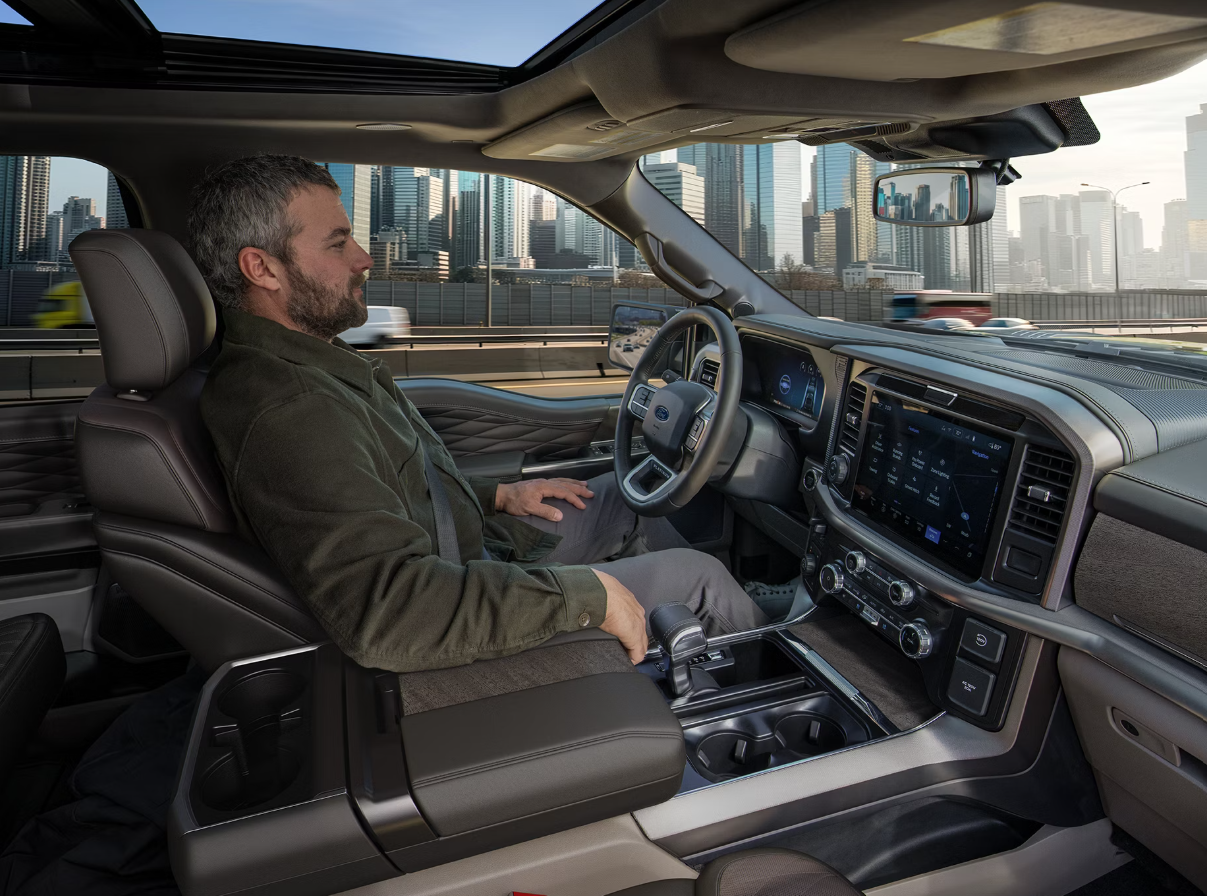
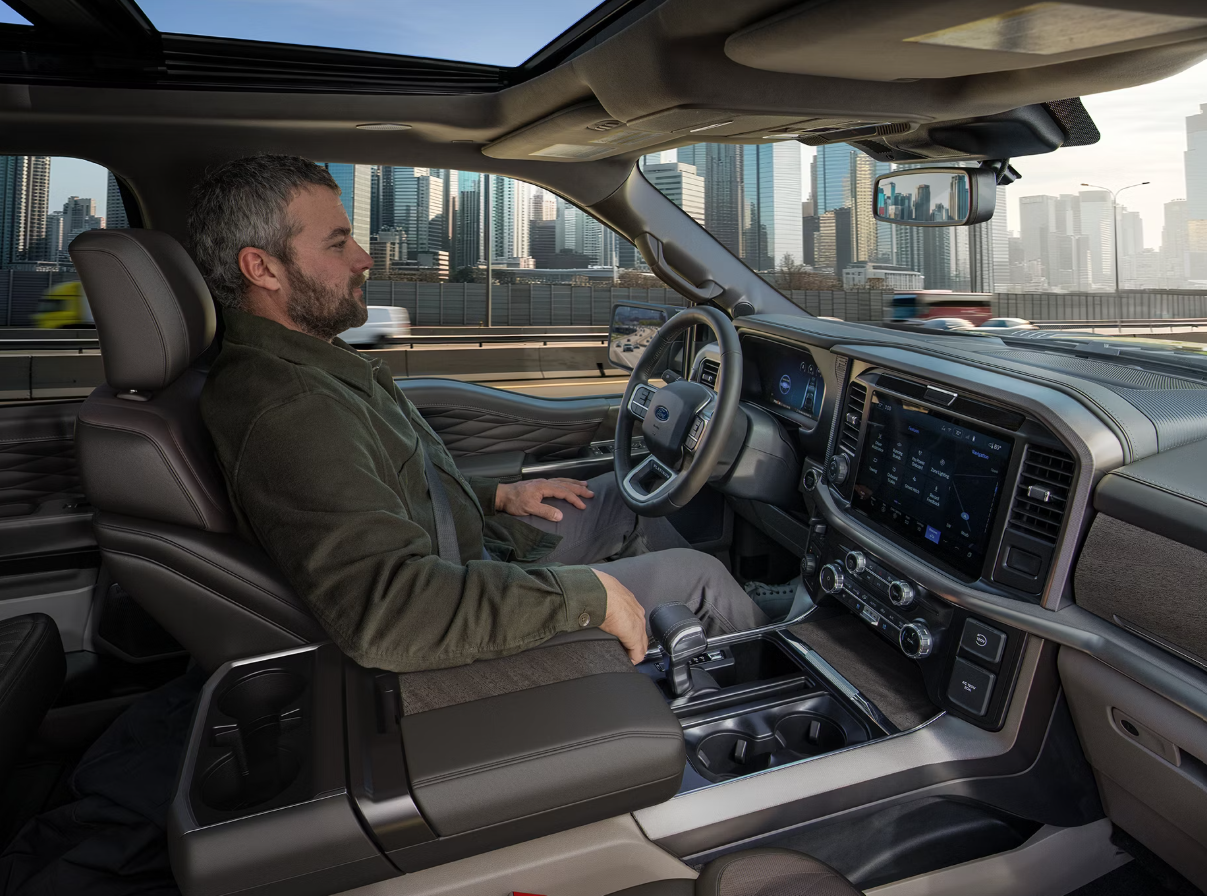
When conditions are right, BlueCruise can help control steering, speed, and following distance on approved divided highways. Ford calls those mapped highway areas Hands-Free Blue Zones. When the vehicle is on one of those roads and the system is active, you may be able to drive without keeping your hands on the wheel.

Your eyes still need to stay on the road.

That part matters. BlueCruise uses a driver-facing camera to help make sure you are paying attention. If you look away too long, the system warns you. If you do not respond, it can disengage and ask you to take over.

So no, BlueCruise is not a self-driving system. It is driver assistance. A very impressive kind of driver assistance, but the driver is still responsible for the vehicle the whole time.

The Difference Between Co-Pilot360 and BlueCruise

Here is the easiest way we explain it in the showroom.

Co-Pilot360 helps with everyday driving. Parking lots, lane changes, backing up, traffic, braking alerts, and general awareness.

BlueCruise helps on certain highways when the vehicle is equipped for it and the road is mapped for hands-free use.

You can have Co-Pilot360 features without having BlueCruise. BlueCruise is the more advanced hands-free highway feature, and it requires the right hardware, software, and connected-service plan.

Trial periods and subscription terms can vary by vehicle, trim, and model year, so we always recommend checking the exact window sticker or asking our team before assuming how long BlueCruise is included.

Where These Features Help Around Cleveland

Some technology sounds great in a commercial but barely matters in real life. This is not really that.

Blind spot alerts are useful on I-480. So is adaptive cruise when traffic keeps speeding up and slowing down. Lane-centering help can take some of the strain out of longer highway drives. Rear cross-traffic alerts are nice when you are backing out between two taller vehicles at a grocery store or school event.

BlueCruise is more of a highway-trip feature. Think Ohio Turnpike, I-71, I-90, or other compatible divided highways when the system is available and active. It can make longer drives feel less tiring, especially when the road is open and steady.

Construction zones, bad weather, faded lane markings, sharp curves, and unmapped roads can all affect how these systems behave. That is normal. The technology is helpful, but it still expects a real driver behind the wheel.

Ford Models That May Offer BlueCruise

BlueCruise availability changes by model year, trim, and equipment package, so the exact vehicle matters.

That said, shoppers often ask about BlueCruise on models like the Ford F-150, Ford Explorer, Ford Expedition, Mustang Mach-E, and select electric or higher-tech Ford vehicles. We have also seen BlueCruise listed on certain vehicles in our own inventory when properly equipped.

If hands-free highway driving is high on your list, tell us early. We can help you find vehicles that include the right BlueCruise hardware and explain what plan or trial may come with that specific model.

You can also browse our Ford model research page if you are still comparing different Ford vehicles.

F-150

The F-150 is one of the models where driver-assist features make a lot of sense. It is a truck people use for everything: work, towing, family duty, long commutes, weekend projects, and road trips.

Co-Pilot360 features can help with lane changes, parking, trailering confidence, and everyday awareness. On select F-150 trims and packages, BlueCruise may also be available. If you spend a lot of time on Cleveland-area highways, that is worth asking about.

You can explore F-150 options on our Ford F-150 page.

Explorer and Expedition

For families, Co-Pilot360 is one of those things you appreciate more after living with it.

The Explorer gives families three-row flexibility without moving into the largest Ford SUV. The Expedition is the bigger answer for more passengers, more cargo, and more towing strength. In both, available driver-assist features can help make daily family driving a little easier.

Backing out of tight spaces, watching blind spots, staying centered on longer highway drives, and managing traffic are all places where the technology earns its keep.

If you are comparing larger Ford SUVs, our model research page is a useful starting point.

Mustang Mach-E

The Mustang Mach-E is one of the Ford models shoppers often connect with BlueCruise because the whole vehicle already feels modern and tech-forward.

For drivers who can charge at home and spend a lot of time commuting around Greater Cleveland, the Mach-E can be an easy EV to live with. Add available BlueCruise on compatible trims, and it becomes especially appealing for people who want an electric SUV with strong driver-assist technology.

You can learn more on our Shop EV Ford page, or read our 2026 Mustang Mach-E trim comparison.

Can BlueCruise Be Added Later?

Sometimes. But not always.

BlueCruise needs specific hardware in the vehicle. If the cameras, sensors, software, and connected-service capability are not there, it usually is not as simple as adding an app after purchase.

If you already own a Ford and are wondering whether your vehicle can use BlueCruise, contact us and we can help point you in the right direction. For shoppers buying new, the best move is to confirm BlueCruise equipment before you buy.

Our contact page is the easiest way to ask about a specific vehicle.

A Few Questions We Hear Often

Does Co-Pilot360 drive the vehicle for me?

No. Co-Pilot360 features are driver-assist tools. They can warn, support, and help in certain situations, but you are still driving.

Does BlueCruise work on every road?

No. Hands-free BlueCruise driving works only where the system allows it, usually on approved mapped divided highways. Outside those areas, you may still have adaptive cruise or lane-centering support, but your hands need to stay on the wheel.

Is BlueCruise free forever?

Usually, no. BlueCruise is a connected service, and many vehicles include some type of trial or plan when properly equipped. The details can change, so we recommend checking the specific vehicle.

Which Ford should I buy if I want the most driver-assist tech?

That depends on whether you want a truck, SUV, or EV. F-150, Explorer, Expedition, and Mustang Mach-E models are all worth looking at if BlueCruise or advanced Co-Pilot360 features are important to you.

Is BlueCruise safe to use in snow?

You still need to use judgment. Heavy snow, poor lane markings, bad visibility, and slick conditions can affect driver-assist systems. In weather like that, stay alert and be ready to drive manually.

See Ford Driver-Assist Features at Ken Ganley Ford Parma

The easiest way to understand Co-Pilot360 and BlueCruise is to sit in the vehicle and see what is actually equipped. Names and packages can blur together online. A window sticker and a real walkaround clear things up pretty quickly.

Ken Ganley Ford Parma serves drivers from Parma, Cleveland, Brook Park, Lakewood, Strongsville, Seven Hills, Parma Heights, Brooklyn, and the surrounding area. If you want a Ford with helpful driver-assist technology, we can help you compare the right models and trims.

Browse our new Ford inventory, explore Ford model research, or reach out through our contact page with questions about a specific vehicle.

Recommended Posts

Ford AWD vs. 4WD Explained

Ford AWD vs. 4WD Explained

Cleveland winters bring lake-effect snow, slush on Brookpark Road and icy mornings on I-480. Two drivetrain terms come up often at the dealership: all-wheel drive (AWD) and four-wheel drive (4WD). Both send power to all four wheels, and each is built for different jobs. This guide explains the difference in everyday terms and shows where each appears in the Ford lineup. Feature AWD 4WD How it works Operates automatically Often selected by the driver Best for Wet roads, snow and daily driving Trails, deep snow, towing Typical Ford models Escape, Explorer, Mustang Mach-E Bronco, Bronco Sport, F-150, Ranger Driver involvement Low Moderate Ford names these systems differently by model, so our team can confirm the exact system on any vehicle you like. How AWD Works An all-wheel-drive system watches for wheel slip and sends power to the wheels with the most grip, all in the background. You turn the key, drive as usual and let the vehicle sort out the rest. That makes AWD ideal for a commute that mixes dry freeway miles with a snowy side street, like the run from Parma to downtown Cleveland. The Escape and Explorer offer AWD, and the Mustang Mach-E offers an electric AWD system, with a second motor driving the front wheels on AWD models. How 4WD Works Four-wheel drive is built for harder jobs. Many 4WD vehicles let the driver choose a mode, such as a setting for snow and loose surfaces, and trucks often add a low-range gear for crawling through mud or pulling a heavy trailer up a slippery ramp. The Bronco Sport includes 4x4 as standard with G.O.A.T. Modes, which tailor traction and throttle response to the surface. The Big Bend offers 5 modes, and the Badlands adds an advanced 4x4 system with a twin-clutch rear drive unit and 7 modes. The Bronco, F-150, Ranger and Expedition (offered in 4x4) round out the 4x4 side of the lineup. Which Fits Your Cleveland Life? Picture a morning on Brookpark Road after an overnight snowfall. An AWD crossover handles the plowed lanes and slushy intersections with ease. A 4WD truck or Bronco carries more on weekends, whether that means pulling a boat toward Lake Erie, clearing a snowy driveway in North Royalton or tackling an unplowed lot. Parma sits west of the heaviest lake-effect bands, which fall east of the city in Geauga County, but snow squalls and icy mornings still reach every neighborhood. Choose AWD for everyday confidence. Choose 4WD when towing, plowing or off-roading are part of your plans. Tires, Fuel and Upkeep The drivetrain helps you go, and tires and brakes decide how well you stop. A set of winter tires improves traction and stopping on every vehicle, AWD and 4WD included. AWD and 4WD add some weight, so fuel economy can dip slightly compared with a two-wheel-drive version of the same vehicle. Keeping all four tires matched in size and wear helps the system work smoothly, and our service center can check your tires and brakes before the first snowfall. Shop Ford Models in Parma Browse our Escape, Bronco Sport, Bronco, Explorer, Expedition, F-150 and Ranger inventory. Ready to talk drivetrains in person? Contact us or check new specials. FAQs What is the main difference between AWD and 4WD? AWD works automatically and suits everyday driving on wet and snowy roads. 4WD is often driver-selected and built for harder jobs like trails, deep snow and towing, and trucks may add a low-range gear for the toughest conditions. Is AWD enough for Cleveland winters? Many Parma drivers find AWD paired with winter tires a great combination for lake-effect snow. It helps you accelerate and climb hills like the ones in North Royalton, and good tires help you stop and turn. Does the Bronco Sport have 4WD? Yes. It comes with 4x4 as standard, along with G.O.A.T. Modes for different surfaces. The Badlands trim adds an advanced 4x4 system with a twin-clutch rear drive unit and 7 modes. Can I get AWD on an electric Ford? Yes. The Mustang Mach-E offers AWD on select trims, with the GT using an upgraded system. AWD models also deliver more horsepower than the base version. Does AWD help me stop faster? Stopping power comes from tires and brakes, so keep both in good shape and add winter tires when the snow arrives. Our service team can inspect them for you.

Ford SUV Cargo Space Compared

Ford SUV Cargo Space Compared

Cargo numbers matter most when real life shows up: a stroller for the Metroparks, hockey bags for a Saturday game at Winterhurst or a Costco run on a snowy Tuesday. This guide compares Ford’s SUVs by cargo space and separates the room behind the rear seats from the maximum room with seats folded, so the numbers match how you actually load a vehicle. SUV Seating Maximum cargo Room behind seats Escape 5 Up to 65.4 cu ft (60.8 hybrid) Second row slides 5.9 in to trade legroom for space Bronco Sport 5 65 cu ft 32 cu ft Explorer Up to 7 85.8 cu ft 16.3 behind row three, 46 behind row two Expedition 7 or 8 108.5 cu ft (123.1 MAX) 22.9 behind row three, 69.9 behind row two (37.4 and 84.5 on MAX) Mustang Mach-E 5 Up to about 60 cu ft Ask our team for the exact figure Cargo figures are published ratings, and usable space varies with how you pack. Our team can show you the real space on any SUV on the lot. Escape and Bronco Sport: Compact and Practical The Bronco Sport lists 32 cubic feet behind the rear seats and 65 cubic feet with them folded. The Escape offers up to 65.4 cubic feet, with hybrid models at 60.8, and its sliding second row lets you favor passengers or cargo on any given day. Both seat five and fit weekly errands in Parma, Strongsville and Berea with room to spare. If you are weighing the two, our Escape vs. Bronco Sport guide covers the details. Explorer: Flexible for Families The Explorer shows why row-by-row numbers help. With the third row up, you have 16.3 cubic feet for groceries or backpacks. Fold the third row and you gain 46 cubic feet behind the second row, which fits a double stroller and a week of shopping. Fold both and you reach 85.8 cubic feet for a trip to the garden center or a move-in weekend at Cleveland State. Expedition: Maximum Room The Expedition keeps generous cargo space even with every seat in use, with 22.9 cubic feet behind the third row and 69.9 behind the second. Maximum space reaches 108.5 cubic feet. The longer Expedition MAX raises those figures to 37.4, 84.5 and 123.1 cubic feet, enough for luggage, a cooler and a full row of passengers on the drive to Pittsburgh or a weekend on Lake Erie. Mustang Mach-E: Electric With Space The Mach-E is a five-seat electric SUV with up to about 60 cubic feet of cargo space. It suits commuters who want electric driving along with practical room for gym bags and groceries. Browse our Shop EV Ford page to learn more. What the Numbers Mean for Daily Life Groceries and backpacks: any SUV on this list handles them Strollers and sports gear: look for 30 or more cubic feet behind the seats you use Road trips: consider the Explorer or Expedition for luggage plus passengers Big hauls: fold the seats and check the maximum number Shop Ford SUVs in Parma Browse our Escape, Bronco Sport, Explorer, Expedition and Mustang Mach-E inventory. Need help choosing? Read our Ford SUV three-row guide, then check new specials or contact us. FAQs Which Ford SUV has the most cargo space? The Expedition, with 108.5 cubic feet at maximum and 123.1 cubic feet on the Expedition MAX. It also leads with the third row up, at 22.9 cubic feet on the standard model and 37.4 on the MAX. What is the difference between behind-the-seat and maximum cargo? Behind-the-seat numbers measure space with the seats upright, which is how you drive most days. Maximum cargo measures space with the rear seats folded, so it shows the most you can carry. Which compact Ford SUV has more room? The Escape and Bronco Sport are close, each offering around 65 cubic feet at maximum. The Bronco Sport lists 32 cubic feet behind the rear seats, and the Escape’s sliding second row gives you flexibility to shift space between passengers and cargo. Will a stroller fit in an Explorer with the third row up? Often yes for a compact stroller, since there are 16.3 cubic feet behind row three. A larger stroller fits easily when you fold the third row, which opens 46 cubic feet. Bring yours to the lot and test it. Can I trade in my current SUV? Yes. Start with our value your trade page, and our team will factor the trade into your numbers on a new Ford.

Which Ford SUVs Have 3 Rows?

Which Ford SUVs Have 3 Rows?

The Ford Explorer and the Ford Expedition both have a third row. The Explorer seats up to seven, and the Expedition seats up to eight. Ford’s other SUVs, including the Escape, Bronco Sport and Bronco, seat five. Here is how the three-row options compare for families across Parma and the west side of Cleveland. SUV Seating Length Cargo behind row three Towing Explorer Up to 7 About 198.8 in 16.3 cu ft 5,000 lbs with the Class III Tow Package Expedition 7 or 8, depending on trim and second-row seats About 209.9 in 22.9 cu ft Up to 9,600 lbs in 4x4 Expedition MAX 7 or 8, depending on trim and second-row seats About 221.7 in 37.4 cu ft Up to 9,000 lbs in 4x4 Seating varies by trim, and our team can confirm the layout on any SUV on the lot. Explorer: The Everyday Three-Row The Explorer is the right-sized three-row SUV for many families in Parma, Seven Hills and Brook Park. At about 16.6 feet long, it fits school pickup lines, grocery lots and older driveways, and its second row folds to open a path to the third. Cargo space adapts to the day: 16.3 cubic feet behind the third row, 46 cubic feet behind the second row and 85.8 cubic feet with both rows folded. The 2.3L EcoBoost makes 300 horsepower, and the Explorer ST adds a 3.0L twin-turbo V6 with 400 horsepower. Trims run from the Active and ST-Line to the Platinum, Tremor and ST. Expedition: Room for Everyone The Expedition is Ford’s largest SUV, and its third row comes with real cargo space behind it. The standard Expedition offers 22.9 cubic feet behind row three, 69.9 behind row two and 108.5 at maximum. The longer MAX stretches those figures to 37.4, 84.5 and 123.1 cubic feet. A 3.5L EcoBoost V6 makes 400 horsepower, and the Tremor raises output to 440. With towing up to 9,600 pounds in 4x4, it suits a boat headed to Lake Erie or a camper bound for the Hocking Hills. Will It Fit in Your Garage? The Explorer measures about 16.6 feet long, the Expedition about 17.5 feet and the MAX about 18.5 feet. Many older homes in Parma, Seven Hills and Brooklyn have garages that suit the Explorer comfortably and make the MAX a tighter fit, so bring a tape measure and a photo of your garage and we will help you decide. Third-Row Tips for Cleveland Families Bring your child seats and bags to the lot and picture a real week, whether that means youth hockey at Winterhurst, a day at Crocker Park or a hike in the Rocky River Reservation. Check how the second row folds to open the walkway, and ask about all-wheel and four-wheel drive for lake-effect snow. Choosing Between Seven and Eight Seats Choose the Explorer when easier parking near the Cleveland Clinic and Crocker Park matters most. Choose the Expedition when six or more people ride often or you tow a boat or camper. Choose the MAX when you want a roomy third row and plenty of luggage space behind it. Smaller households can compare the Escape and Bronco Sport in our Escape vs. Bronco Sport guide, or see how the Explorer stacks up against the Escape in our Explorer vs. Escape guide. Shop Three-Row Fords in Parma Browse our Explorer inventory and Expedition inventory, then check new specials, explore financing or contact us. FAQs Which Ford SUVs have a third row? The Explorer and the Expedition. The Explorer seats up to seven, and the Expedition seats seven or eight depending on the trim and second-row seats. Our team can show you the layouts side by side on the lot. Does the Ford Bronco have a third row? The Bronco seats five, so the Explorer and Expedition are the Ford SUVs to compare for a third row. If you want the Bronco’s style with more room, the Explorer Tremor is a good place to start. Which has more room behind the third row? The Expedition. It offers 22.9 cubic feet behind row three, and the MAX offers 37.4 cubic feet. The Explorer offers 16.3 cubic feet, which still fits groceries and backpacks. Which three-row Ford tows more? The Expedition, rated up to 9,600 pounds in 4x4 and 9,000 pounds on the MAX. The Explorer is rated for 5,000 pounds with the Class III Tow Package. Ratings change with configuration, so our team can confirm the number for the SUV you choose. Is the third row comfortable for adults? Comfort depends on the passenger and the trip. The best way to judge is to climb into the third row during a test drive, so bring your family along.