
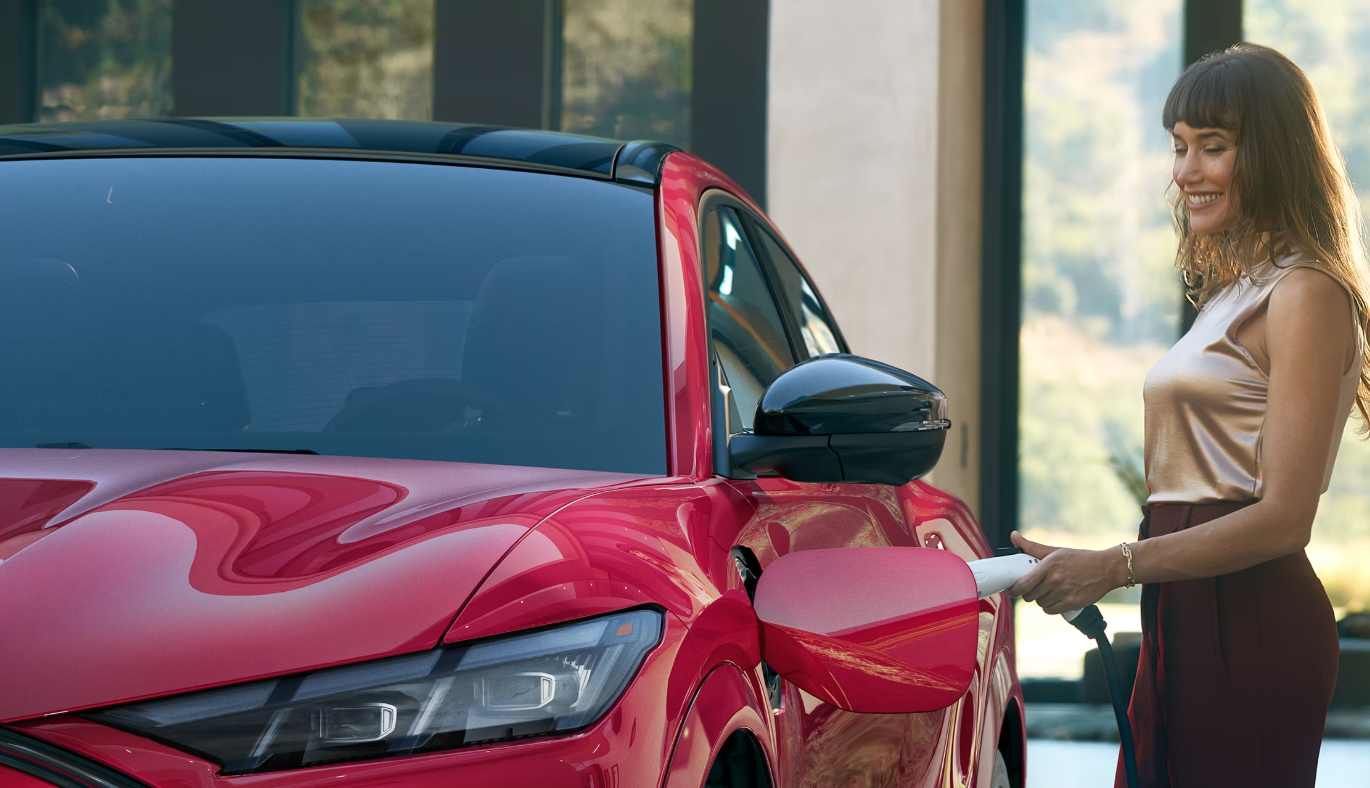
Charging an electric Ford is not as strange as it sounds the first time someone explains it.
Most people picture public chargers first. The ones near shopping centers, highway stops, parking garages, grocery stores, maybe the ones they pass and never really notice. Those matter, especially on longer drives. But for a lot of Ford EV owners around Parma and Cleveland, charging mostly happens at home.
Plug in at night. Leave in the morning. That is the routine.
At Ken Ganley Ford Parma, we help drivers compare Ford EVs and talk through the charging side before they buy. Mustang Mach-E shoppers ask different questions than E-Transit fleet buyers. F-150 Lightning owners have their own set of questions too, especially if they tow, use truck power, or want backup power at home.
If you are just starting, our Shop EV Ford page is a good place to see what Ford electric options are available.
Start With Home Charging
Home charging is where EV ownership usually becomes easy.
If you can charge where you park, you are already most of the way there. You do not have to wait until the battery is low. You do not have to make a separate stop. You just plug in when it makes sense and let the vehicle charge while it is sitting anyway.
For some drivers, a regular household outlet can work for light use. That is Level 1 charging. It is slow, but if you only drive a few miles a day, it may be enough to add back what you used.
Most EV owners eventually want Level 2 charging. That uses a 240-volt setup, more like what a dryer or range uses. It is much faster and better suited for daily life with a Mustang Mach-E, E-Transit, or electric truck.
Before installing a charger, have a licensed electrician look at your panel. A newer home may be simple. An older Cleveland-area home may need extra work. Either way, it is better to know before you plan your whole routine around it.
Level 1, Level 2, and DC Fast Charging
The names sound more technical than they need to.
Level 1 is the slow one. Standard outlet. Useful in a pinch or for very short daily driving.
Level 2 is the one most people want at home. Faster, cleaner, easier to build a routine around.
DC fast charging is the public road-trip option. It can add charge much more quickly, but it is not usually how people charge every day. Think of it more like stopping for fuel on a longer trip, not your normal nightly routine.
Charging speed depends on the vehicle, the battery, the charger, the temperature, and how full the battery already is. A nearly empty battery charges differently than one that is already at 72 percent. Cold weather can change things too. That is normal.
Charging Around Cleveland
Public charging has improved quite a bit around Northeast Ohio. You can find chargers near retail areas, hospitals, universities, downtown garages, highway corridors, and Turnpike routes. Some are fast chargers. Some are slower Level 2 stations meant for longer parking stops.
Ford EV drivers can use the Ford app to find public stations through the BlueOval Charge Network. The network includes many public charging providers, and certain Ford EVs can also access designated Tesla Superchargers with an available NACS fast-charging adapter.
That adapter detail is worth checking. Not every charger uses the same connector, and equipment can vary by vehicle and model year. If you are looking at a specific Ford EV, we can help you confirm what comes with it and what may be available.
For everyday ownership, though, we would still start with this question: where will you charge most nights?
If the answer is “at home,” things get much simpler.
What About Apartment or Condo Drivers?
This is where EV shopping needs a little more planning.
If you live in an apartment, condo, or shared parking situation, ask about charging before you buy. Some buildings already have chargers. Some will allow installation. Some are still figuring it out.
Public charging can fill the gap, but we would want to talk honestly about your routine. If you drive a lot and do not have home or workplace charging, an EV can still work, but it takes more planning.
If you mostly drive around Parma, Cleveland, Lakewood, Brook Park, Strongsville, or Seven Hills and have a reliable charger nearby, you may be fine. If charging would always feel like an errand, that matters.
Cleveland Winters and EV Range
Cold weather affects electric range. No need to pretend it does not.
When temperatures drop, the battery has to work harder and the cabin uses energy for heat. Snow, slush, wind, highway speed, and tire pressure can all affect efficiency too.
The good news is that Ford EVs are built with cold-weather driving in mind. Preconditioning helps. When you warm the cabin while the vehicle is still plugged in, you leave with a more comfortable interior and preserve more of the battery for driving.
Our advice for Cleveland winters is simple. Charge more often. Use scheduled departure features if your vehicle has them. Keep the tires properly inflated. Do not wait until the battery is almost empty before thinking about the next charge.
It is a lot like winter gas driving in one way: plan a little, and your day goes better.
Mustang Mach-E Charging
The Mustang Mach-E is probably the easiest Ford EV for many families and commuters to picture in daily life.
It works well for school runs, office commutes, errands, weekend trips, and normal Cleveland-area driving. If you can charge at home, most days are simple. Plug in when you get home, leave with the range you need.
Public fast charging is useful for longer drives, and the Ford app can help locate compatible stations. If you are comparing trims, battery options, or charging equipment, our Shop EV Ford page can help you start narrowing things down.
F-150 Lightning Charging
The F-150 Lightning brought a different kind of EV conversation to truck shoppers.
Charging is only part of it. People also ask about towing, winter range, job-site power, home backup capability, and whether an electric truck fits the way they actually use a pickup.
For Lightning owners, Level 2 home charging is usually the setup to look at first. If the truck works during the day and charges overnight, the routine makes sense. If you tow often or drive long distances, then route planning and charging access matter more.
Current availability and ordering information can change, so if you are looking specifically for an F-150 Lightning, contact us through our Ken Ganley Ford Parma contact page and we can help you see what options are available.
E-Transit Charging for Business Use
E-Transit charging is a business conversation.
If your vans run local routes, come back to the same place, and sit overnight, depot charging can be a very good fit. Delivery companies, service businesses, maintenance teams, and local fleets may be able to charge at the shop and start each day ready to go.
The key is planning before the vans arrive. How many vehicles? How many miles per day? How long are they parked? How much electrical capacity does the building have? Will every van need to charge every night?
Those answers matter more than a generic range number.
If your business is comparing electric and gas Transit options, you can also visit our commercial vehicles page.
The Ford App Helps More Than People Expect
A lot of the EV routine runs through the Ford app.
You can check charge status, find public chargers, plan around charging stops, and manage certain connected features depending on your vehicle. For many owners, the app becomes part of the daily rhythm pretty quickly.
It is also helpful when more than one person drives the vehicle. You can see whether the vehicle is charging, how much range is available, and whether it is ready before someone heads out.
A Few Things to Ask Before You Buy
Before choosing a Ford EV, we would ask a few practical questions.
Where will you charge most often?
How far do you drive on a normal weekday?
Do you have a garage, driveway, or assigned parking spot?
Do you take frequent road trips?
Do you tow?
Are you buying for yourself, your family, or a business?
Do you want to install a home charger right away, or start with a simpler setup first?
None of those questions are meant to talk you out of an EV. They just help us point you toward the right one.
Charging Incentives and Electric Rates
Incentives for chargers, EV purchases, and electric rates can change. Your utility company may offer programs for off-peak charging, and there may be federal or local incentives depending on the timing and your situation.
Around Greater Cleveland, utility providers can vary by city and address, so it is best to check directly with your electric provider. If tax credits are part of your decision, talk with your tax professional too.
We can help with vehicle details, available Ford offers, and shopping information through our finance center.
Shop Ford EVs at Ken Ganley Ford Parma
If you are thinking about a Ford EV near Cleveland, we would be happy to walk through the charging side with you. Ken Ganley Ford Parma serves drivers from Parma, Cleveland, Brook Park, Lakewood, Strongsville, Seven Hills, Parma Heights, Brooklyn, and nearby Northeast Ohio communities.
Browse our Shop EV Ford page, check our new Ford inventory, or visit our model showroom to compare Ford vehicles.
Charging gets easier once you know where it fits into your day. We can help you figure that part out before you bring your next Ford EV home.