
Blog

Ford Towing Capacity Guide: F-150, Ranger, Maverick, and Super Duty

Ford Towing Capacity Guide: F-150, Ranger, Maverick, and Super Duty

Towing numbers can get messy fast.

One truck says it can tow one number. Another window sticker says something else. Then you add an engine choice, cab size, axle ratio, tow package, payload, passengers, gear in the bed, and suddenly the “simple” answer is not so simple anymore.

That is usually where we step in.

At Ken Ganley Ford Parma, we help truck shoppers around Parma, Cleveland, Brook Park, Lakewood, Strongsville, Seven Hills, and the west side figure out which Ford truck actually fits the trailer they plan to pull. Maybe it is a small utility trailer. Maybe it is a boat headed toward Lake Erie. Maybe it is a camper, landscaping trailer, enclosed work trailer, or a gooseneck setup for serious hauling.

The right truck depends on the weight, the route, and how often you tow. Not just the biggest number in the brochure.

Start With the Trailer, Not the Truck

If you already own the trailer, start there. Look at the trailer’s gross vehicle weight rating, not just what it weighs empty. A boat, camper, horse trailer, or equipment trailer can gain weight quickly once it is loaded.

Then think about the truck itself. People count too. So do tools, coolers, luggage, hitch equipment, cargo in the bed, and anything else coming along for the ride.

That is why we do not like cutting towing numbers too close. If your trailer is right at the edge of a truck’s rating, you may technically be within range, but it probably will not feel like the most confident setup.

Ford Maverick: Light Towing, Easy Daily Driving

The Ford Maverick is the smallest truck in the Ford lineup, and that is a big part of its charm.

It is easy to park, easy to drive around Cleveland, and useful for people who want a truck bed without moving into full-size pickup territory. For towing, the Maverick is best for lighter jobs. Standard towing capacity is 2,000 pounds, and properly equipped models with the available 4K Tow Package can tow up to 4,000 pounds.

That covers more than some people expect. Small utility trailers. A pair of jet skis. A small fishing boat. A motorcycle trailer. A light camper, depending on weight.

We would point you toward the Maverick if towing is occasional and your everyday driving matters just as much. If you tow every weekend or your trailer is already close to 4,000 pounds, we would probably start talking about Ranger or F-150 instead.

You can browse current options through our new Ford inventory.

Ford Ranger: More Pull Without Going Full-Size

The Ranger is a nice middle step.

It gives you more towing strength than the Maverick while still feeling easier to maneuver than an F-150. For a lot of drivers, that is the sweet spot. You get a real truck feel, strong capability, and a size that still works well in parking lots, garages, and daily traffic.

When properly equipped with the available Trailer Tow Package, the 2026 Ford Ranger can tow up to 7,500 pounds. That opens the door to many boats, enclosed trailers, ATV trailers, small campers, and work trailers.

If you tow regularly but do not need a full-size truck every day, the Ranger deserves a look. It is especially easy to like if your trailer is comfortably under its max rating and you still want a truck that feels manageable Monday through Friday.

Ford F-150: The One Most People Compare First

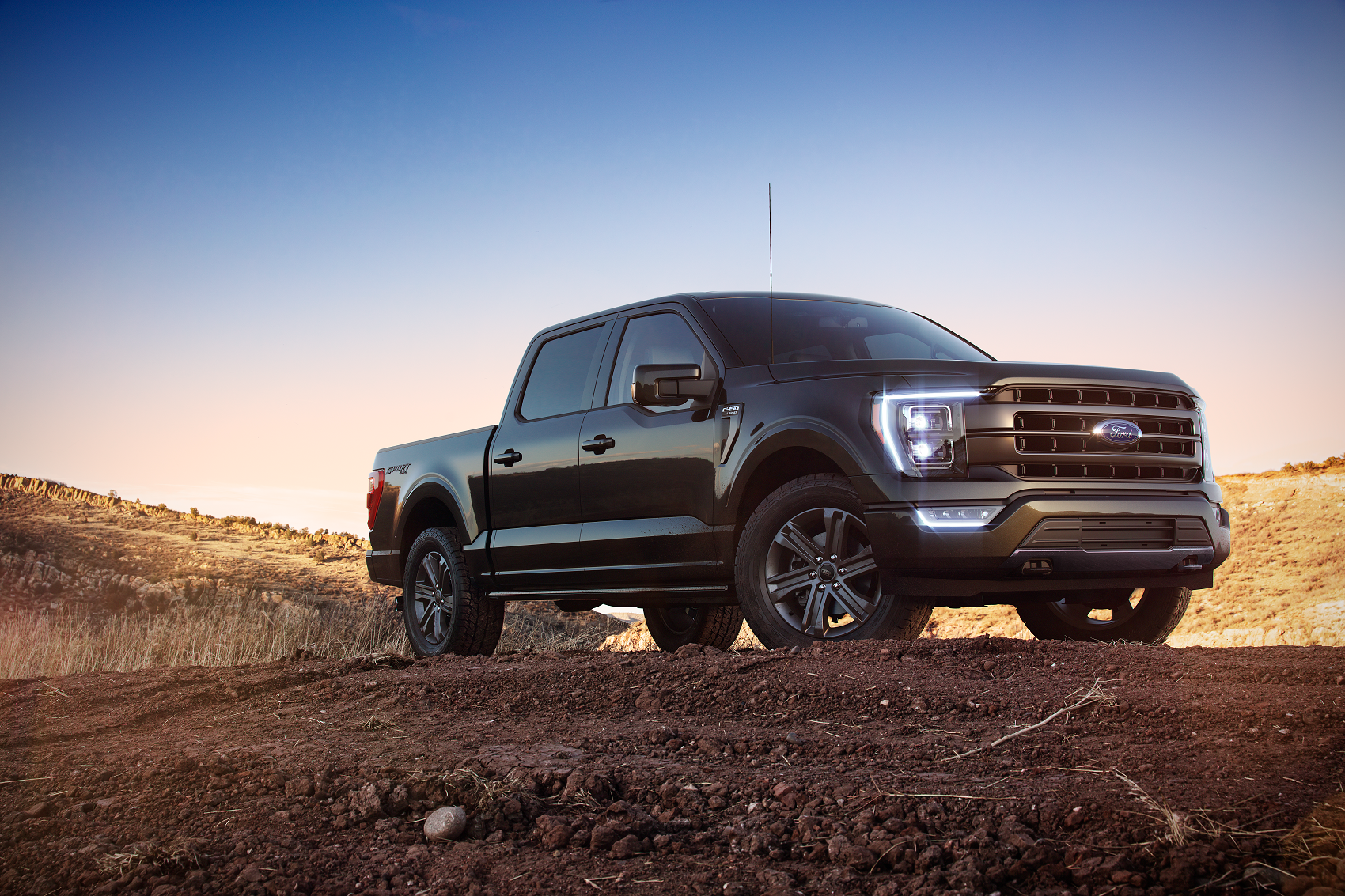
The F-150 is the truck many shoppers already have in mind when they start talking about towing.

And for good reason. It has a wide engine lineup, available towing technology, strong payload capability, and the kind of everyday comfort that makes it work as both a family vehicle and a work truck.

For 2026, the F-150 offers a maximum available tow rating of up to 13,500 pounds when properly equipped. That is the number a lot of buyers are looking for, but the exact rating depends on the truck. Engine, cab, bed, drivetrain, axle, and tow package all matter.

Most Cleveland-area shoppers looking to tow a camper, boat, enclosed trailer, landscaping setup, or work trailer will find the F-150 has plenty of room to work with. The 3.5-liter EcoBoost V6 is a popular choice for serious towing. The 5.0-liter V8 has its own loyal following. The PowerBoost hybrid brings strong capability with the added benefit of available onboard power, which can be useful at job sites, campsites, and tailgates.

If you are comparing F-150 trucks, look closely at the window sticker. Two trucks that look similar from across the lot may not have the same tow rating.

You can start with our Ford F-150 page or check our new Ford inventory.

Ford Super Duty: When the Load Gets Serious

If your towing needs are too much for an F-150, that is what Super Duty is for.

The Ford Super Duty lineup includes F-250, F-350, and F-450 models built for heavy work. These trucks are meant for larger campers, heavy equipment, livestock trailers, commercial trailers, fifth-wheel setups, gooseneck towing, and people who tow enough that “close enough” is not good enough.

Properly equipped Super Duty trucks can tow far beyond the F-150. Select configurations can reach up to 30,000 pounds with conventional towing and up to 40,000 pounds with gooseneck towing. That is serious capability, and it comes with more decisions: gas or diesel, single rear wheel or dual rear wheel, axle ratio, cab size, bed length, payload, and hitch setup.

The available 6.7-liter Power Stroke diesel is the engine many heavy haulers ask about first, especially for long grades, frequent towing, and heavier trailers. Gas Super Duty models still make sense for plenty of work buyers too, depending on trailer weight and budget.

If your truck is for business, take a look at our commercial vehicles page. We can help with work-focused Ford trucks, vans, and commercial configurations.

The Part People Forget: Payload

Tow rating gets most of the attention. Payload can be the limiting factor.

If you are pulling a trailer, the tongue weight counts against payload. So do passengers, tools, cargo, accessories, and anything in the bed. A truck may have a strong tow rating and still run out of payload sooner than expected depending on how it is equipped.

This is especially important for campers and enclosed trailers. They can put a lot of weight on the hitch, and that weight does not disappear just because the truck can technically pull the trailer.

When you visit us, bring the trailer specs if you have them. Gross trailer weight, tongue weight, hitch type, and how you normally load it all help us match the right truck.

Towing Tech Is Worth Asking About

Ford trucks have gotten much easier to tow with over the years.

Depending on the model and equipment, you may find features like an integrated trailer brake controller, trailer sway control, Pro Trailer Backup Assist, trailer reverse guidance, tow/haul drive mode, blind spot coverage for trailers, smart hitch features, camera views, and onboard scales.

Do you need all of that? Maybe not.

But if you tow often, some of these features can make a long drive or a tight backing situation a whole lot less stressful. If you are newer to towing, they can help build confidence. If you already tow all the time, they can make the truck feel like a better tool.

A Simple Way to Choose

If you tow light and want something easy to live with every day, start with Maverick.

If you tow moderate loads and want a midsize truck, look at Ranger.

If you tow campers, boats, work trailers, or heavier weekend loads, F-150 is probably the first serious comparison.

If you are towing heavy equipment, large trailers, fifth-wheel campers, or gooseneck loads, go straight to Super Duty.

That is the quick answer. The better answer depends on your trailer.

Talk Towing With Ken Ganley Ford Parma

At Ken Ganley Ford Parma, we help truck buyers from Parma, Cleveland, Brook Park, Lakewood, Strongsville, Seven Hills, Middleburg Heights, Brooklyn, and nearby Northeast Ohio communities compare Ford towing options the right way.

Tell us what you are towing. Tell us how often. Tell us whether the truck also needs to commute, carry family, haul tools, or work every day. From there, we can help you compare Maverick, Ranger, F-150, and Super Duty models without guessing.

Browse our new Ford inventory, explore our Ford F-150 selection, or contact us through our Ken Ganley Ford Parma contact page if you want help finding a truck built for your trailer.


Recommended Posts

Chevy Colorado vs. Silverado 1500: Which Truck Is Right for You?

Chevy Colorado vs. Silverado 1500: Which Truck Is Right for You?

Some truck choices are easy. This one usually takes a little talking through. The Chevy Colorado and Chevy Silverado 1500 both make sense for Ohio drivers, but not for the same reasons. One is easier to park, easier to live with day to day, and still plenty capable. The other gives you more truck in every direction: more cab space, more towing power, more engine choices, and more confidence when the trailer gets heavy. At Preston Chevrolet in Burton, we help drivers from Geauga County, Chardon, Middlefield, Bainbridge, and the greater Cleveland area compare these two all the time. If you are stuck between them, start with how you actually use a truck during a normal week. That answer usually points you in the right direction pretty quickly. The Simple Difference The Chevy Colorado is our midsize pickup. It is a great fit if you want a real truck without the size of a full-size model. It handles tight roads, small parking lots, trailheads, and daily errands without making every stop feel like a project. The Chevy Silverado 1500 is our full-size light-duty truck. It is the one we point you toward when towing, payload, rear-seat room, and engine choice matter more than having the smallest footprint possible. Both are useful. Both are comfortable. Both can be built for work, family, weekends, or a mix of all three. They just solve different problems. Living With the Colorado Day to Day The Colorado is the easier truck to settle into if you are coming out of an SUV, crossover, or older compact pickup. Around Burton and the surrounding townships, that matters. Not every driveway is wide. Not every parking spot is generous. Not every back road gives you much shoulder. That smaller size is one of the Colorado’s biggest advantages. It feels light on its feet, but it still gives you the bed space and towing ability that make a pickup worth buying in the first place. We like the Colorado for drivers who haul tools, bikes, kayaks, hunting gear, landscaping supplies, or a small trailer, but do not need a full-size truck every single day. It is also a strong choice if you want something with genuine off-road ability. The Colorado ZR2 has earned its reputation for a reason. You can browse our current Chevrolet truck selection through our new Chevy inventory when you are ready to compare trims and pricing. Where the Silverado 1500 Starts to Pull Away The Silverado 1500 feels different because it is built for bigger jobs. More cab room. More bed options. More powertrain choices. More towing headroom. If you have a camper, a larger boat, a work trailer, or equipment that gets moved more than once in a while, the Silverado 1500 is usually the better long-term answer. It gives you room to grow into the truck instead of buying right up against the limit of what you need today. That matters. A truck that technically can tow your trailer is not always the truck you want to tow with every weekend. The Silverado gives you more breathing room, especially when you start adding passengers, gear in the bed, hills, wind, and real-world Ohio driving into the picture. Towing: Be Honest About the Trailer This is the section where we usually slow the conversation down. The Chevy Colorado can tow up to about 7,700 pounds when properly equipped. For a midsize truck, that is a serious number. It covers utility trailers, small campers, side-by-sides, personal watercraft, and plenty of smaller boats. The Silverado 1500 can tow up to 13,300 pounds when properly equipped. That is a much bigger ceiling, and it is the reason so many truck shoppers end up choosing Silverado once they start looking closely at their trailer weight. If you tow a few times a year and the trailer is not especially heavy, the Colorado may be all the truck you need. If towing is part of your work, your weekends, or your family travel plans, the Silverado 1500 gives you more room to work safely and comfortably. Before you buy, we can help you compare the exact truck, engine, axle ratio, tow package, payload rating, and trailer weight. That last part is important. The number on the brochure is not always the number on the specific truck sitting on the lot. Engines and Driving Feel The Colorado keeps things simple with strong turbocharged power. It has enough torque to feel confident around town and useful when loaded. For many drivers, that is part of the appeal. You are not sorting through a long engine list. You are choosing the trim and capability level that fits you. The Silverado 1500 gives you more choices. Depending on availability and configuration, shoppers may find the TurboMax engine, V8 options, and the Duramax diesel. That wider engine range is one of the Silverado’s strongest selling points. Some drivers want V8 power. Some want diesel efficiency and low-end torque. Some just want a dependable gas truck that can handle a little of everything. If you are not sure which engine fits your driving, we can talk through it with you at the store. We would rather match you to the right setup the first time than watch you buy more truck, or less truck, than you actually need. Off-Road Use: Colorado ZR2 or Silverado Trail Boss? If your idea of a good weekend includes dirt roads, camp access roads, muddy job sites, or trails, both trucks deserve a look. The Colorado ZR2 is the more nimble off-road choice. It is smaller, easier to place on tighter trails, and built with serious hardware. For drivers who want an off-road truck first and a daily driver second, it makes a lot of sense. The Silverado Trail Boss and Silverado ZR2 bring off-road confidence to the full-size side. You get the bigger cabin, stronger truck platform, and more towing ability, along with the suspension and traction upgrades that help when pavement ends. So the question is not really “which one can go off-road?” Both can. The better question is whether you want the Colorado's tighter, more trail-friendly feel or the Silverado's bigger, more powerful feel. Cabin Space and Family Use This is where a test drive helps. The Colorado works well for smaller families, couples, solo drivers, and anyone who wants truck capability without a huge cabin. The interior is modern, the technology is easy to use, and the crew cab gives you a usable second row. The Silverado 1500 is simply roomier. If you have growing kids, car seats, tall passengers, or coworkers riding with you often, the extra space is hard to ignore. The Silverado crew cab feels more relaxed on longer drives, especially if you are headed toward Cleveland, Lake Erie, or out of state with everyone packed in. Both trucks offer modern screens, smartphone connectivity, driver-assist features, and available comfort upgrades. The Silverado just gives everyone more space to stretch out. Work Truck Buyers Should Look Closely at the Silverado The Colorado can absolutely work for a business. It is a smart choice for lighter-duty use, site visits, small crews, parts runs, and anyone who wants a professional truck without full-size costs. The Silverado 1500 gives business owners more flexibility. More payload. More towing. More configurations. More room for crew and tools. If your truck is tied directly to your income, that extra capability can pay for itself. For commercial customers, we recommend starting with our fleet and commercial options. We can help you evaluate work-ready trucks, business-use needs, upfit options, and the specs that matter after the truck leaves the lot. Price and Value The Colorado usually wins on starting price and everyday operating costs. If you want the lower payment, smaller size, and better efficiency, it is the easier truck to justify. The Silverado 1500 costs more, but you are paying for real added capability. If you will use the towing capacity, larger cabin, bigger bed, or engine choices, the value is there. Our finance team can help you compare payments, current offers, trade-in value, and lease or purchase options. Sometimes the difference between two trucks is smaller than expected once you factor in incentives and trade equity. You can also check current Chevrolet special offers before you visit. Our Plain Answer Choose the Chevy Colorado if you want a truck that is easy to drive every day, capable enough for weekend hauling, and available with serious off-road personality. It is the better fit if you value maneuverability and don't tow heavy trailers regularly. Choose the Chevy Silverado 1500 if you need more towing power, more passenger room, more engine choices, or a truck that can handle heavier work without feeling stretched. It is the safer bet for frequent towing, bigger families, and buyers who plan to keep their truck for the long haul. If you are still torn, drive both. That usually clears it up. The Colorado feels right to some people within the first mile. The Silverado does the same for drivers who know they want the extra room and strength. Start with our new Chevrolet inventory, or use Shop Click Drive if you want to begin the process from home. When you are ready, we will help you compare the Colorado and Silverado 1500 side by side at Preston Chevrolet in Burton. Frequently Asked Questions What is the biggest difference between the Chevy Colorado and Silverado 1500? The Colorado is a midsize truck, while the Silverado 1500 is a full-size truck. The Colorado is easier to maneuver and usually more efficient. The Silverado 1500 offers more towing capacity, more cabin space, more engine choices, and a larger overall footprint. Which truck tows more? The Silverado 1500 tows more. When properly equipped, it can tow up to 13,300 pounds. The Colorado can tow up to about 7,700 pounds when properly equipped. Is the Chevy Colorado enough truck for Ohio drivers? For many drivers, yes. If you tow lighter trailers, haul weekend gear, commute, or drive on tighter roads around Geauga County, the Colorado can be a practical fit. Is the Silverado 1500 better for families? The Silverado 1500 is usually better for larger families because it offers more rear-seat room, especially in crew cab models. The Colorado works well for smaller families, but the Silverado is more comfortable when passengers often ride in the back. Which truck is better for off-roading? The Colorado ZR2 is excellent for tighter trails and drivers who want a midsize off-road truck. The Silverado Trail Boss and Silverado ZR2 are better if you want off-road capability with full-size truck space and power. Can I finance a Colorado or Silverado 1500 at Preston Chevrolet? Yes. Our finance department can help you compare options for either truck, including current offers, trade-in value, and payment estimates. Does Preston Chevrolet serve truck shoppers outside Burton? Yes. We work with Chevy truck shoppers from Burton, Chardon, Middlefield, Bainbridge, Geauga County, and the greater Cleveland area.

Ford EV Charging Guide for Cleveland-Area Drivers

Ford EV Charging Guide for Cleveland-Area Drivers

Charging an electric Ford is not as strange as it sounds the first time someone explains it. Most people picture public chargers first. The ones near shopping centers, highway stops, parking garages, grocery stores, maybe the ones they pass and never really notice. Those matter, especially on longer drives. But for a lot of Ford EV owners around Parma and Cleveland, charging mostly happens at home. Plug in at night. Leave in the morning. That is the routine. At Ken Ganley Ford Parma, we help drivers compare Ford EVs and talk through the charging side before they buy. Mustang Mach-E shoppers ask different questions than E-Transit fleet buyers. F-150 Lightning owners have their own set of questions too, especially if they tow, use truck power, or want backup power at home. If you are just starting, our Shop EV Ford page is a good place to see what Ford electric options are available. Start With Home Charging Home charging is where EV ownership usually becomes easy. If you can charge where you park, you are already most of the way there. You do not have to wait until the battery is low. You do not have to make a separate stop. You just plug in when it makes sense and let the vehicle charge while it is sitting anyway. For some drivers, a regular household outlet can work for light use. That is Level 1 charging. It is slow, but if you only drive a few miles a day, it may be enough to add back what you used. Most EV owners eventually want Level 2 charging. That uses a 240-volt setup, more like what a dryer or range uses. It is much faster and better suited for daily life with a Mustang Mach-E, E-Transit, or electric truck. Before installing a charger, have a licensed electrician look at your panel. A newer home may be simple. An older Cleveland-area home may need extra work. Either way, it is better to know before you plan your whole routine around it. Level 1, Level 2, and DC Fast Charging The names sound more technical than they need to. Level 1 is the slow one. Standard outlet. Useful in a pinch or for very short daily driving. Level 2 is the one most people want at home. Faster, cleaner, easier to build a routine around. DC fast charging is the public road-trip option. It can add charge much more quickly, but it is not usually how people charge every day. Think of it more like stopping for fuel on a longer trip, not your normal nightly routine. Charging speed depends on the vehicle, the battery, the charger, the temperature, and how full the battery already is. A nearly empty battery charges differently than one that is already at 72 percent. Cold weather can change things too. That is normal. Charging Around Cleveland Public charging has improved quite a bit around Northeast Ohio. You can find chargers near retail areas, hospitals, universities, downtown garages, highway corridors, and Turnpike routes. Some are fast chargers. Some are slower Level 2 stations meant for longer parking stops. Ford EV drivers can use the Ford app to find public stations through the BlueOval Charge Network. The network includes many public charging providers, and certain Ford EVs can also access designated Tesla Superchargers with an available NACS fast-charging adapter. That adapter detail is worth checking. Not every charger uses the same connector, and equipment can vary by vehicle and model year. If you are looking at a specific Ford EV, we can help you confirm what comes with it and what may be available. For everyday ownership, though, we would still start with this question: where will you charge most nights? If the answer is “at home,” things get much simpler. What About Apartment or Condo Drivers? This is where EV shopping needs a little more planning. If you live in an apartment, condo, or shared parking situation, ask about charging before you buy. Some buildings already have chargers. Some will allow installation. Some are still figuring it out. Public charging can fill the gap, but we would want to talk honestly about your routine. If you drive a lot and do not have home or workplace charging, an EV can still work, but it takes more planning. If you mostly drive around Parma, Cleveland, Lakewood, Brook Park, Strongsville, or Seven Hills and have a reliable charger nearby, you may be fine. If charging would always feel like an errand, that matters. Cleveland Winters and EV Range Cold weather affects electric range. No need to pretend it does not. When temperatures drop, the battery has to work harder and the cabin uses energy for heat. Snow, slush, wind, highway speed, and tire pressure can all affect efficiency too. The good news is that Ford EVs are built with cold-weather driving in mind. Preconditioning helps. When you warm the cabin while the vehicle is still plugged in, you leave with a more comfortable interior and preserve more of the battery for driving. Our advice for Cleveland winters is simple. Charge more often. Use scheduled departure features if your vehicle has them. Keep the tires properly inflated. Do not wait until the battery is almost empty before thinking about the next charge. It is a lot like winter gas driving in one way: plan a little, and your day goes better. Mustang Mach-E Charging The Mustang Mach-E is probably the easiest Ford EV for many families and commuters to picture in daily life. It works well for school runs, office commutes, errands, weekend trips, and normal Cleveland-area driving. If you can charge at home, most days are simple. Plug in when you get home, leave with the range you need. Public fast charging is useful for longer drives, and the Ford app can help locate compatible stations. If you are comparing trims, battery options, or charging equipment, our Shop EV Ford page can help you start narrowing things down. F-150 Lightning Charging The F-150 Lightning brought a different kind of EV conversation to truck shoppers. Charging is only part of it. People also ask about towing, winter range, job-site power, home backup capability, and whether an electric truck fits the way they actually use a pickup. For Lightning owners, Level 2 home charging is usually the setup to look at first. If the truck works during the day and charges overnight, the routine makes sense. If you tow often or drive long distances, then route planning and charging access matter more. Current availability and ordering information can change, so if you are looking specifically for an F-150 Lightning, contact us through our Ken Ganley Ford Parma contact page and we can help you see what options are available. E-Transit Charging for Business Use E-Transit charging is a business conversation. If your vans run local routes, come back to the same place, and sit overnight, depot charging can be a very good fit. Delivery companies, service businesses, maintenance teams, and local fleets may be able to charge at the shop and start each day ready to go. The key is planning before the vans arrive. How many vehicles? How many miles per day? How long are they parked? How much electrical capacity does the building have? Will every van need to charge every night? Those answers matter more than a generic range number. If your business is comparing electric and gas Transit options, you can also visit our commercial vehicles page. The Ford App Helps More Than People Expect A lot of the EV routine runs through the Ford app. You can check charge status, find public chargers, plan around charging stops, and manage certain connected features depending on your vehicle. For many owners, the app becomes part of the daily rhythm pretty quickly. It is also helpful when more than one person drives the vehicle. You can see whether the vehicle is charging, how much range is available, and whether it is ready before someone heads out. A Few Things to Ask Before You Buy Before choosing a Ford EV, we would ask a few practical questions. Where will you charge most often? How far do you drive on a normal weekday? Do you have a garage, driveway, or assigned parking spot? Do you take frequent road trips? Do you tow? Are you buying for yourself, your family, or a business? Do you want to install a home charger right away, or start with a simpler setup first? None of those questions are meant to talk you out of an EV. They just help us point you toward the right one. Charging Incentives and Electric Rates Incentives for chargers, EV purchases, and electric rates can change. Your utility company may offer programs for off-peak charging, and there may be federal or local incentives depending on the timing and your situation. Around Greater Cleveland, utility providers can vary by city and address, so it is best to check directly with your electric provider. If tax credits are part of your decision, talk with your tax professional too. We can help with vehicle details, available Ford offers, and shopping information through our finance center. Shop Ford EVs at Ken Ganley Ford Parma If you are thinking about a Ford EV near Cleveland, we would be happy to walk through the charging side with you. Ken Ganley Ford Parma serves drivers from Parma, Cleveland, Brook Park, Lakewood, Strongsville, Seven Hills, Parma Heights, Brooklyn, and nearby Northeast Ohio communities. Browse our Shop EV Ford page, check our new Ford inventory, or visit our model showroom to compare Ford vehicles. Charging gets easier once you know where it fits into your day. We can help you figure that part out before you bring your next Ford EV home.

Ford BlueCruise and Co-Pilot360 Features Explained

Ford BlueCruise and Co-Pilot360 Features Explained

Driver-assist technology can sound more confusing than it needs to. Ford uses names like Co-Pilot360, Co-Pilot360 Assist, Co-Pilot360 Active, and BlueCruise. They are all related, but they are not the same thing. That is where a lot of shoppers get stuck. At Ken Ganley Ford Parma, we talk through these features with drivers all the time. Some people want help in traffic. Some want better confidence backing out of a crowded parking lot. Some are specifically looking for hands-free highway driving for trips across Ohio. Different features, different expectations. Here is the simpler way to look at it. Co-Pilot360 Is the Foundation Ford Co-Pilot360 is the name Ford uses for its driver-assist technology package. Think of it as the base layer of safety and convenience features found across much of the Ford lineup. Depending on the model and trim, Co-Pilot360 may include helpful features like Pre-Collision Assist with Automatic Emergency Braking, a Lane-Keeping System, a Rear View Camera, Auto High-Beam Headlamps, and available BLIS with Cross-Traffic Alert. That sounds like a mouthful. In daily driving, it is much more straightforward. Your Ford can help warn you if traffic slows ahead. It can alert you if you start drifting out of your lane. It can help you see what is behind you when backing up. It can warn you when another vehicle is sitting in your blind spot. None of that replaces paying attention, but it can make normal driving around Parma, Cleveland, Brook Park, Lakewood, and Strongsville feel a little less stressful. If you are shopping now, you can compare available features in our new Ford inventory. BlueCruise Is the Hands-Free Highway Feature BlueCruise is the feature most people ask about once they see “hands-free” mentioned. When conditions are right, BlueCruise can help control steering, speed, and following distance on approved divided highways. Ford calls those mapped highway areas Hands-Free Blue Zones. When the vehicle is on one of those roads and the system is active, you may be able to drive without keeping your hands on the wheel. Your eyes still need to stay on the road. That part matters. BlueCruise uses a driver-facing camera to help make sure you are paying attention. If you look away too long, the system warns you. If you do not respond, it can disengage and ask you to take over. So no, BlueCruise is not a self-driving system. It is driver assistance. A very impressive kind of driver assistance, but the driver is still responsible for the vehicle the whole time. The Difference Between Co-Pilot360 and BlueCruise Here is the easiest way we explain it in the showroom. Co-Pilot360 helps with everyday driving. Parking lots, lane changes, backing up, traffic, braking alerts, and general awareness. BlueCruise helps on certain highways when the vehicle is equipped for it and the road is mapped for hands-free use. You can have Co-Pilot360 features without having BlueCruise. BlueCruise is the more advanced hands-free highway feature, and it requires the right hardware, software, and connected-service plan. Trial periods and subscription terms can vary by vehicle, trim, and model year, so we always recommend checking the exact window sticker or asking our team before assuming how long BlueCruise is included. Where These Features Help Around Cleveland Some technology sounds great in a commercial but barely matters in real life. This is not really that. Blind spot alerts are useful on I-480. So is adaptive cruise when traffic keeps speeding up and slowing down. Lane-centering help can take some of the strain out of longer highway drives. Rear cross-traffic alerts are nice when you are backing out between two taller vehicles at a grocery store or school event. BlueCruise is more of a highway-trip feature. Think Ohio Turnpike, I-71, I-90, or other compatible divided highways when the system is available and active. It can make longer drives feel less tiring, especially when the road is open and steady. Construction zones, bad weather, faded lane markings, sharp curves, and unmapped roads can all affect how these systems behave. That is normal. The technology is helpful, but it still expects a real driver behind the wheel. Ford Models That May Offer BlueCruise BlueCruise availability changes by model year, trim, and equipment package, so the exact vehicle matters. That said, shoppers often ask about BlueCruise on models like the Ford F-150, Ford Explorer, Ford Expedition, Mustang Mach-E, and select electric or higher-tech Ford vehicles. We have also seen BlueCruise listed on certain vehicles in our own inventory when properly equipped. If hands-free highway driving is high on your list, tell us early. We can help you find vehicles that include the right BlueCruise hardware and explain what plan or trial may come with that specific model. You can also browse our Ford model research page if you are still comparing different Ford vehicles. F-150 The F-150 is one of the models where driver-assist features make a lot of sense. It is a truck people use for everything: work, towing, family duty, long commutes, weekend projects, and road trips. Co-Pilot360 features can help with lane changes, parking, trailering confidence, and everyday awareness. On select F-150 trims and packages, BlueCruise may also be available. If you spend a lot of time on Cleveland-area highways, that is worth asking about. You can explore F-150 options on our Ford F-150 page. Explorer and Expedition For families, Co-Pilot360 is one of those things you appreciate more after living with it. The Explorer gives families three-row flexibility without moving into the largest Ford SUV. The Expedition is the bigger answer for more passengers, more cargo, and more towing strength. In both, available driver-assist features can help make daily family driving a little easier. Backing out of tight spaces, watching blind spots, staying centered on longer highway drives, and managing traffic are all places where the technology earns its keep. If you are comparing larger Ford SUVs, our model research page is a useful starting point. Mustang Mach-E The Mustang Mach-E is one of the Ford models shoppers often connect with BlueCruise because the whole vehicle already feels modern and tech-forward. For drivers who can charge at home and spend a lot of time commuting around Greater Cleveland, the Mach-E can be an easy EV to live with. Add available BlueCruise on compatible trims, and it becomes especially appealing for people who want an electric SUV with strong driver-assist technology. You can learn more on our Shop EV Ford page, or read our 2026 Mustang Mach-E trim comparison. Can BlueCruise Be Added Later? Sometimes. But not always. BlueCruise needs specific hardware in the vehicle. If the cameras, sensors, software, and connected-service capability are not there, it usually is not as simple as adding an app after purchase. If you already own a Ford and are wondering whether your vehicle can use BlueCruise, contact us and we can help point you in the right direction. For shoppers buying new, the best move is to confirm BlueCruise equipment before you buy. Our contact page is the easiest way to ask about a specific vehicle. A Few Questions We Hear Often Does Co-Pilot360 drive the vehicle for me? No. Co-Pilot360 features are driver-assist tools. They can warn, support, and help in certain situations, but you are still driving. Does BlueCruise work on every road? No. Hands-free BlueCruise driving works only where the system allows it, usually on approved mapped divided highways. Outside those areas, you may still have adaptive cruise or lane-centering support, but your hands need to stay on the wheel. Is BlueCruise free forever? Usually, no. BlueCruise is a connected service, and many vehicles include some type of trial or plan when properly equipped. The details can change, so we recommend checking the specific vehicle. Which Ford should I buy if I want the most driver-assist tech? That depends on whether you want a truck, SUV, or EV. F-150, Explorer, Expedition, and Mustang Mach-E models are all worth looking at if BlueCruise or advanced Co-Pilot360 features are important to you. Is BlueCruise safe to use in snow? You still need to use judgment. Heavy snow, poor lane markings, bad visibility, and slick conditions can affect driver-assist systems. In weather like that, stay alert and be ready to drive manually. See Ford Driver-Assist Features at Ken Ganley Ford Parma The easiest way to understand Co-Pilot360 and BlueCruise is to sit in the vehicle and see what is actually equipped. Names and packages can blur together online. A window sticker and a real walkaround clear things up pretty quickly. Ken Ganley Ford Parma serves drivers from Parma, Cleveland, Brook Park, Lakewood, Strongsville, Seven Hills, Parma Heights, Brooklyn, and the surrounding area. If you want a Ford with helpful driver-assist technology, we can help you compare the right models and trims. Browse our new Ford inventory, explore Ford model research, or reach out through our contact page with questions about a specific vehicle.