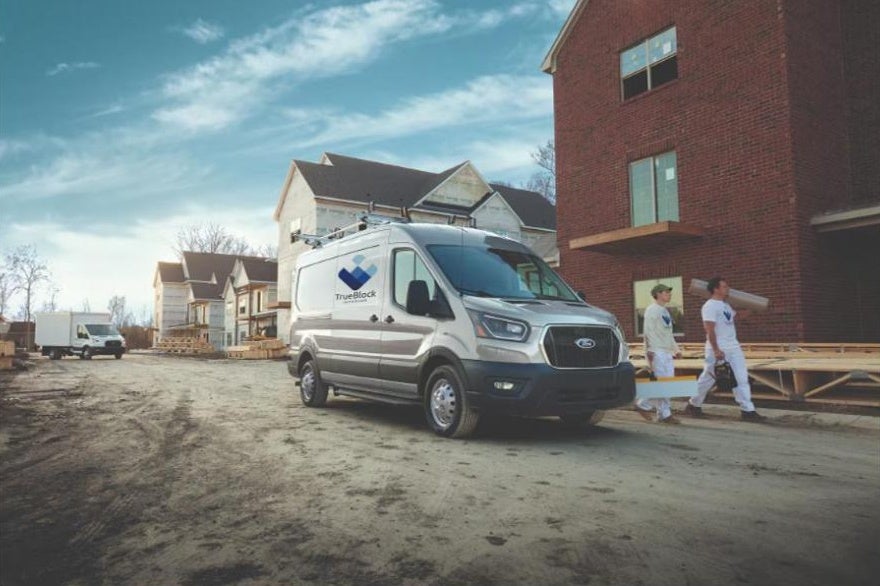


The gas Transit fits businesses with changing routes and heavy loads, while the all-electric E-Transit fits fixed daily routes that end at a charger. Payload tops out at 5,103 pounds for the Transit, while the E-Transit carries less and covers an EPA-estimated 143 to 159 miles per charge.
Side-by-Side Look
Here are the numbers that matter most when you compare the two vans, and they'll shape the rest of the decision.
| Transit cargo van | E-Transit cargo van | |
|---|---|---|
| Powertrain | 3.5L PFDi V6, optional 3.5L EcoBoost V6, 10-speed automatic | All electric, 89 kWh battery |
| Fueling | Gas pump | Plug in at your lot or a public charger |
| Range | Refuel at any station | 143 to 159 EPA-estimated miles, by roof height and length |
| Maximum payload | Up to 5,103 lbs | Varies by roof height and length |
| Roof heights | Low, medium, high | Low, medium, high |
Fueling and Charging
The Transit keeps your day simple, because you fill up at any station, and your route can change from morning to afternoon without a second thought. That keeps the workday flexible.
The E-Transit shifts the routine to your own lot. A full charge on a 240V, 80A Level 2 charger takes about 6 hours, so overnight charging fits neatly into closing up shop. On the road, a DC fast charger adds a big share of charge in about half an hour.
Home base matters, since a van that returns to the same spot every night is a natural match for a charger.
Payload and Cargo Space
You'll find both vans in low, medium and high roof heights, and the Transit adds regular, long and extended lengths. Browse the Transit trim levels to see the cargo configurations side by side.
Payload leans toward the Transit, with up to 5,103 pounds in its heaviest-duty configuration. The E-Transit carries less, which suits parcels and light equipment. The E-Transit trim levels lay out the roof and length options for the electric van.
Which Van Fits Which Business
Pick the E-Transit when the route is predictable and the van sleeps at the same address each night. Delivery loops, scheduled service calls and campus or depot work all match that pattern. Its optional 2.4 kW Pro Power Onboard can run your tools at the job, too.
Pick the Transit when days vary, trips run long, or you load up near the top of the payload range. It also suits businesses that fuel on the go, since there's no charging plan to build around.
Our team handles both vans, and the commercial vans and trucks page shows the full lineup. We'll match one to your route and your load.
Transit and E-Transit Questions
How far can an E-Transit go on a charge?
The E-Transit's EPA-estimated range runs from 159 miles with the low roof down to 143 with the high roof. Your load, speed and the weather also affect the number, so match the range to your longest regular day.
How fast does an E-Transit charge?
On a 180+ kW DC fast charger, the E-Transit goes from 10 to 80 percent in about 28 minutes. At your lot on a 240V, 80A Level 2 charger, a full charge takes about 6 hours.
Which carries more, the Transit or the E-Transit?
The Transit carries more, with maximum payload up to 5,103 pounds in its heaviest-duty configuration, while the E-Transit carries less. Payload varies by roof height and length, so tell us what you haul and we'll match the van.
Which engines does the Transit offer?
The Transit cargo van comes with a 3.5L PFDi V6 as standard and offers a 3.5L EcoBoost V6 as an option. Both pair with a 10-speed automatic transmission. Our commercial team can help you choose the engine that fits your loads and routes.
Can an E-Transit run tools on the job?
Yes. The E-Transit offers Pro Power Onboard as an option, delivering 2.4 kW of power from the van for tools and equipment at a work site. Add it to your build if your crew works away from outlets, and you'll have power wherever the van parks.
Find the Right Van for Your Business
Tell us about your routes and your loads, and we'll help you compare both vans in person, so you'll see the difference firsthand. Explore commercial financing for your next work van, or contact our commercial team to get started.