
Blog / Ken Ganley Ford Parma

Which Ford Van Is Best for a Small Business?

Which Ford Van Is Best for a Small Business?

A van that runs deliveries all day and a van packed with a plumber's tools are both called work vans, yet they ask very different things of the vehicle. Pick by the work first and the model second.

For most small businesses, a Ford Transit cargo van is the best starting point, because its three roof heights and three lengths fit deliveries, trades and equipment hauling. The all-electric E-Transit suits fixed daily routes that end at a charger, with an EPA-estimated range of 143 to 159 miles.

Delivery Routes

Delivery work rewards easy loading and predictable days, and that's where the Transit family shines. Parma's commercial strips, such as Polish Village on Ridge Road and Ukrainian Village on State Road, are the stop-after-stop routes where a regular or long Transit makes parking easier. A regular or long Transit makes tight stops and parking easier, and a medium or high roof lets you step in and sort parcels without crouching.

If every route starts and ends at your own lot, the E-Transit deserves a close look. You charge overnight, you leave with a full battery, and the van's EPA-estimated range of 143 to 159 miles covers a defined loop. The E-Transit trim levels show the roof and length options.

Mobile Service and Trades

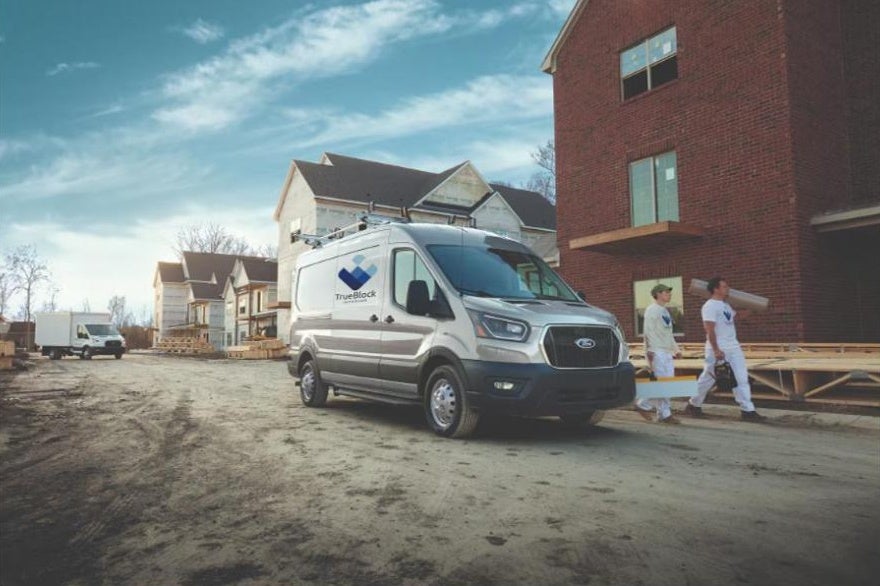
Plumbers, electricians, HVAC techs and other trades carry a lot of small parts, so they're picky about layout. Shelving and bins turn a Transit into a rolling shop, and headroom decides how comfortably you work inside it.

A medium roof is a good first look for most trades, and a high roof earns its place when parts storage is the daily routine. Compare the Transit trim levels to see how the cargo configurations differ.

Hauling Tools and Equipment

Longer loads call for the extended length, and heavier loads call for a closer look at payload. The Transit reaches up to 5,103 pounds in its most capable configuration, while the E-Transit carries less, with payload varying by roof height and length.

Some businesses need a custom body or a layout that goes beyond a standard cargo van. Our commercial team works with upfit providers, and you can also look at our chassis and cutaway models for jobs that need something special.

Small Local Fleets

Two or three vans raise a lot of the same questions: how far they go each day, where they park at night and who drives them. Matching the powertrain to the route keeps a fleet simple: Transits cover the variable days, and E-Transits cover the fixed loops.

Our commercial vans and trucks team serves contractors, tradespeople, fleet managers and small businesses across Parma and Cleveland, and we're glad to work with owners who need a single vehicle.

Picking Your Starting Point

Your van should work as hard as you do, every day. Jot down three things before you shop: how far the van drives, where it sleeps at night and what it carries. Those three answers point to a Transit or an E-Transit, then to a roof height and a length.

Bring that list to our team, and we'll sort through the considerations with you.

Small Business Van Questions

Which Ford van is best for a delivery business?

The Transit cargo van suits most delivery work, with regular and long lengths that handle tight stops. If your routes are fixed and the van returns to the same lot each night, the E-Transit adds quiet driving and charging at your own location.

Which van suits a plumber, electrician or other trades business?

The Transit cargo van is the usual choice for trades. A medium or high roof gives you headroom to work, and the length you pick sets your shelving and floor space. Tell us your tools and parts, and we'll match a configuration.

Is the E-Transit practical for a small business?

It's practical when your day follows a predictable route and the van charges at a regular spot. The EPA-estimated range of 143 to 159 miles depends on the roof height and length, so match it to your longest regular day.

Can the commercial team help plan shelving and upfits?

Yes. Our commercial team works with upfit providers and helps you plan racks, shelving and other equipment around your van. Bring your tool list and your daily routine, and we'll talk through the options that'll suit your build.

Can I trade in my current work van?

Yes. You can start with our Value Your Trade tool for an initial estimate, then bring the van in. The final value depends on mileage, condition and equipment, and our team can apply it toward your next vehicle.

Find Your Van in Parma

Ready to see a few vans in person? Our commercial team can walk you through them. Explore commercial financing or contact the team to start the conversation.
Posted in:

Related Posts

Can You Charge a Ford EV at Home

Can You Charge a Ford EV at Home?

Yes. You can charge a Ford EV at home with Ford's mobile power cord on a standard 120V outlet, or with a 240V Level 2 setup for faster charging. A licensed electrician can add a 240V outlet or install a Ford Connected Charge Station in your garage. Most owners work through the same short checklist. It starts with the outlet you already have. Start With the Outlet You Have Ford's mobile power cord plugs into a standard 120V household outlet, and it may need no special installation if the outlet is conveniently located. That makes Level 1 charging the simplest way to begin. It's also the slowest option. For a typical commute, plugging in all night can top up the battery, which makes Level 1 a good fit when your daily miles are modest. Add a 240V Outlet for Level 2 The same cord works with a 240V outlet like the one an electric stove uses, and it charges faster. It may require a licensed professional. The Ford Connected Charge Station is a Level 2 charger that's installed by a professional. It suits drivers who want a permanent wall unit in the garage. What an Electrician Checks A licensed electrician starts with your electrical panel to see how much capacity is available. From there they can install a 240V outlet or hardwire a charger, and they can help secure permits and schedule inspections if your area requires them. Ask for a quote with the charger you're considering in mind. Our team will help you choose the right model for your vehicle, and you can see what's on the lot at the Shop EV Ford page or during a visit. How Long a Mustang Mach-E Takes On a 48-amp Level 2 charger, the Mustang Mach-E charges in a night. Work vans follow the same overnight pattern. Vehicle Charger Charge time Mach-E, standard range, rear-wheel drive 48-amp Level 2 About 7.8 hours Mach-E, standard range, eAWD 48-amp Level 2 About 7.7 hours Mach-E GT and Rally, extended range 48-amp Level 2 About 9.9 hours E-Transit 240V, 80A Level 2 About 6 hours Business owners can read more about the E-Transit before planning a depot charger. Where DC Fast Charging Fits DC fast charging happens at public stations along your route, and it's designed for road trips. The E-Transit, for example, goes from 10 to 80 percent in about 28 minutes on a 180+ kW charger. Think of home charging as your daily fill-up and public fast charging as the occasional top-up on a long drive. Home Charging Questions Can I plug a Ford EV into a regular outlet? Yes. Ford's mobile power cord plugs into a standard 120V household outlet, and it may need no special installation if the outlet is conveniently located. It's the slowest way to charge, so it suits drivers who can plug in for many hours each night. Do I need an electrician to install a home charger? A 120V outlet may need none. A 240V outlet, like the one an electric stove uses, may require a licensed professional, and the Ford Connected Charge Station is installed by one. An electrician can assess your panel, install the outlet or hardwire the charger. How long does a Mustang Mach-E take on a Level 2 charger? On a 48-amp Level 2 charger, a standard-range Mach-E takes about 7.7 to 7.8 hours, and an extended-range GT or Rally takes about 9.9 hours. That fits comfortably inside an overnight plug-in, so the car is ready when you are. What is the difference between Level 1, Level 2 and DC fast charging? Level 1 uses a 120V household outlet and charges slowest. Level 2 uses 240V and charges much faster, which makes it the usual home upgrade. DC fast charging happens at public stations and adds charge quickly on road trips. Does a home charger installation need a permit? That depends on your area and the work involved. A licensed electrician can help secure permits and schedule inspections if they're needed, so bring it up when you request a quote. Ask about it early so nothing slows down your install. Take a Test Drive See how an electric Ford fits your routine, whether you're in Parma, Parma Heights or Seven Hills. Schedule a test drive and bring your garage questions along, and our team will help you plan your setup.

Ford Transit Cargo Van Sizes Explained

Ford Transit Cargo Van Sizes Explained

Walk through a lot of work vans and they all look about the same until you step inside. Then a few inches decide whether your shelving fits and whether you can stand up while you restock. On the Transit, three choices set those inches: roof height, length and payload. Ford builds the Transit cargo van in three roof heights, low, medium and high, and three lengths, regular, long and extended. Roof height sets headroom, length sets floor space, and each combination carries its own payload, with the most capable setup reaching up to 5,103 pounds. Roof Height Roof height changes how you work inside the van. The low roof keeps the van just under seven feet tall overall, which helps with garages and parking structures. The medium roof means a slight stoop for taller crews, and the high roof lets most people stand upright. Roof Overall height Maximum cargo height Low About 82 to 83 in About 54 to 57 in Medium About 99 to 101 in About 70 to 72 in High About 109 to 110 in About 80 to 82 in If you restock shelves inside the van all day, you'll find the high roof pays off quickly. If your van spends time in a low-clearance garage or parking deck, you'll want to measure the opening first and compare it to the low roof's overall height. Length and Wheelbase Length sets your floor space and how the van handles in tight spots. Regular length uses a 130-inch wheelbase. Long and extended both use a 148-inch wheelbase, and extended adds even more length. Length Wheelbase Overall length Regular 130 in 217.8 in Long 148 in 235.5 in Extended 148 in 263.9 in The largest cargo area, a high roof paired with extended length, offers up to 487.3 cubic feet of cargo volume. Shorter lengths are easier to park and turn around in a tight lot, which helps on dense Parma and Cleveland routes along Ridge Road and State Road. Payload and Engines Payload is the weight of the cargo, tools and passengers the van can carry, and it varies by configuration. The Transit reaches up to 5,103 pounds in its high-roof, extended-length, heavy-duty setup. Under the hood, a 3.5L PFDi V6 is standard and a 3.5L EcoBoost V6 is optional, both paired with a 10-speed automatic. Review the Transit trim levels to see which configurations fit your build. Matching Size to the Job Start with how you work inside the van. Restocking and standing work: high roof, so you move freely. Garage parking: low roof, which stays just under seven feet tall. Dense city routes: regular or long length, for easier turns and parking. Heavy loads or long shelving: extended length with the payload you need. Our commercial team can walk through these trade-offs with you, and we'll compare real vans on the lot. Learn more about the Transit van lineup, or see all of our commercial vans and trucks. Transit Size Questions What roof heights does the Transit cargo van come in? The Transit cargo van comes in low, medium and high roof heights. The low roof stands just under seven feet tall overall, the medium roof is a bit over eight feet and the high roof tops nine feet, so you can match the roof to how you work and where you park. How long is a Transit cargo van? Regular length measures 217.8 inches overall on a 130-inch wheelbase. Long and extended both ride on a 148-inch wheelbase, with long adding about a foot and a half and extended adding more than two feet beyond that. Choose regular for tight parking, or extended when floor space and long items matter most. Can an adult stand up inside a Transit cargo van? Yes. The high roof gives a maximum cargo height of about 80 to 82 inches, which is tall enough for most people to stand and work. The medium roof suits stooping work, and the low roof suits seated or crouching work. What is the most a Transit cargo van can carry? Maximum payload reaches up to 5,103 pounds in the high-roof, extended-length, heavy-duty configuration. Other configurations carry less, so tell us what you haul, and we'll match the roof, length and payload to your work. Our commercial sales team will walk you through the choices. Will a Transit fit in my garage or loading bay? The low roof stands about 82 to 83 inches tall, just under seven feet. Medium and high roofs are taller, so you'll want to measure your door opening against the van's overall height before you choose. We'll gladly compare the options with you in person. Size Up Your Next Van When you're ready to compare, talk with our commercial sales team about your route and your load, or look at commercial financing options for your next Transit.

Ford EV vs. Hybrid: Which Is Better for Cleveland-Area Driving?

Ford EV vs. Hybrid: Which Is Better for Cleveland-Area Driving?

Pull into the driveway after a January commute and the real question shows up: is there a place to plug in? That one answer settles most of the EV or hybrid decision for drivers in Parma and the Cleveland area. Choose the Mustang Mach-E if you can plug in where you park, because charging at home fits an EV into your routine. Choose a hybrid like the Maverick or the F-150 PowerBoost if you fuel at the pump and want winter and road trips to stay simple. Start With Where You Park A garage or driveway with an outlet makes an EV easy. Ford's mobile power cord plugs into a standard 120V outlet, and a 240V outlet like the one an electric stove uses charges faster. If your home needs that outlet, a licensed electrician can add it. The 2026 Mustang Mach-E has EPA-estimated range from 240 to 320 miles, depending on trim, battery and drive. That's plenty of cushion for most weekday routines. If you park on the street or in a shared lot, a hybrid is the easier fit, since every fuel stop happens at a station you already know. Winter Driving in Northeast Ohio Lake-effect weather is part of life around Cleveland, and both powertrains handle it fine. An EV loses some range in deep cold because the battery works harder and the cabin needs heat, and that's normal. Preconditioning while the car is plugged in warms the cabin and the battery before you leave, which protects range. A hybrid also uses more fuel when it's cold, and a quick stop at the pump resets the range. The Maverick Hybrid is EPA-estimated at up to 42 mpg city with front-wheel drive, and it's available with all-wheel drive for snowy mornings. Commutes and Road Trips For a daily drive, the Mach-E fits neatly into a plug-in-at-night rhythm. You leave each morning with a charged battery and seldom see a charging station. Road trips add charging stops for an EV, so plan your route around chargers. A hybrid keeps the stops at gas stations, and the F-150 PowerBoost adds towing capability when properly configured. Check the F-150 trim levels if a truck is on your list. Side-by-Side Look Mustang Mach-E (EV) Maverick Hybrid or F-150 PowerBoost Fueling Plug in at home or at public chargers Gas pump Home setup Outlet; 240V recommended for speed None needed Winter routine Precondition while plugged in, park in a garage Fill up as usual Road trips Plan charging stops Fuel stops anywhere Best for Drivers who can charge where they park Street parkers and drivers who tow or haul Which One Fits Which Driver If you've got a garage and a short, predictable commute, the Mach-E is a smart match. If you share a driveway or park on the street, you'll be happier with a hybrid. The F-150 PowerBoost is the one to look at if you tow, haul or work from the truck, and the Maverick Hybrid is the one if you want a compact truck that sips fuel in the city. Ford EV and Hybrid Questions What if I can't plug in where I park? A hybrid fits that situation well because it fuels at the pump. Public charging can work for an EV, but it takes planning around your schedule. Tell us where you park and how far you drive, and we'll point you toward the better match. Which works better for long highway drives? Either one works well on the highway. A hybrid keeps trips simple with the fuel stops you already know. A Mach-E adds charging stops, and its EPA-estimated range of 240 to 320 miles depends on the trim, battery and drive, so pick the range that covers your longest regular trip. Is a hybrid an easier first step into electrified driving? Often it is, because a hybrid drives like the vehicle you know, with no cable and no new routine, while an electric motor helps with fuel use. If you're curious about EVs, a Mach-E test drive shows the difference within minutes. How should I compare fueling costs between an EV and a hybrid? Compare what you pay for electricity at home with what you pay at the pump for the miles you drive. Your local rates, your routes and your charging habits all change the result, so the answer is personal, and we'll gladly walk through your numbers together. Can an EV handle a Cleveland winter commute? Yes. A Mustang Mach-E handles winter commutes well when you precondition the cabin while plugged in, park in a garage when you can, and expect range to dip in deep cold. Heated seats and a warm start help you get the most from every charge. Take the Next Step Want to feel the difference? Schedule a test drive in a Mach-E or a hybrid, see the electric lineup at Shop EV Ford, or browse new Ford inventory for the one that matches your routine.